
 VideoProc Converter
 New AI features are available

 Listed in
 "I have several older digital videos with grain and blur recorded in the early 2000s. Topaz did a decent job at cleaning up the video, and I'm wondering if there is a solution of comparable ability…Basically, take an older VHS video and try to make it into 720p clarity. That's what I'm after."
The right video upscaler can be a game-changer for crisp and clear video quality. Topaz Video AI sets a bar in this field, but there's no one-size-fits-all solution. People may look for a Topaz Video alternative for various reasons - like cost factors and sometimes demanding hardware requirements.
So, this blog delves into the alternative to Topaz Video with hands-on reviews. Whether you want to enhance old family videos or upscale your movie collections, I'd love to share what I've discovered to help you find the best Topaz Video alternative.

TL; DR Quick Comparison
I am well aware that the AI video enhancement landscape is constantly seeing new software enter the fray. I purchased tools like HitPaw, UniFab, and CapCut this year to evaluate their performance, but ultimately decided to keep my existing list largely unchanged for now, though I have incorporated some new findings. Hopefully, this will provide some information to help you make your decision.
| Software | VideoProc Converter AI | AVCLabs Video Enhancer AI | Video2X | Nero AI Video Upscaler | TensorPix |
|---|---|---|---|---|---|
Pricing |
$34.95/yr for 3 PCs; |
$95.96/yr for 1 PC; |
Free |
$84.95/yr for 1 PC; |
From $12/mo or $66/yr, extra credit from $0.80 |
Max Output Res. for Video Upscaling |
4K |
8K |
4K |
8K |
4K |
Avg. |
~6.386 |
~5.967 |
~3.872 |
~10.4 |
~1.701 |
Ease of Use (1=Easiest, 5=Hardest) |
2 |
4 |
5 |
3 |
1 |
Min GPU Req. (1=Lowest, 5=Highest) |
2 |
4 |
3 |
5 |
1 |
Here's my two cents: If you have a regular or mid-range computer and want an easy-to-use tool that delivers reliable results without frustration, VideoProc Converter AI is usually the most practical choice. Those on a tight budget or who mainly upscale anime content may prefer the free and open-source Video2X, while users looking for the fastest processing or higher 8K upscaling might lean toward Nero AI Video Upscaler. If you prefer not to install any software at all, the web-based TensorPix offers simple convenience.
Testing Methodology
The test pool includes two videos. One is a realistic-style clip from an old movie, and the other is from an animation-style video. Since the alternatives showed very close upscaling results in the test of the animation-style video, this blog will only display the upgrading results for realistic-style videos. I extracted ten frames from each upscaled video and selected the same frame to show the results.
Clip No.1 is a realistic-style video encoded with the AVC codec. This clip is 15 seconds long, features a resolution of 636x480, and runs at 23.976 fps. Clip No.2 is a 13-second amine-style video encoded with the AVC codec. It features a resolution of 640x480 and runs at 24 fps.
All the tests are conducted on a Windows 10 PC with an Intel Core i7-13700K processor (24 CPUs, ~3.4GHz), 32GB of RAM, and an AMD Radeon RX 7600 graphics card.
Over time, Topaz Labs' products have changed significantly. The video product shifted to a more integrated "Topaz Video" naming and feature set (read our Topaz Video review here), where "Video Enhance AI" became a core module rather than the defining standalone purpose, expanding to include frame interpolation, stabilization, and more advanced models. All tests here primarily focus on resolution and image quality improvement, given the original main functions of Video Enhance AI.
1. VideoProc Converter AI
- Time Taken: ~57 seconds
- Avg. Processing FPS: ~6.386 frames per second
- Max Output Resolution: 4K
- Min GPU Requirement: Intel HD Graphics 2000 / AMD Radeon HD 7700 series / NVIDIA GeForce GT 630 or higher
- Pricing: $34.95/year for 3 PCs; $54.95 lifetime for 1 PC
- Ideal for: Casual users and non-technical editors who value a simple interface, stable results, and reasonable speed on mid-range PCs.
VideoProc Converter AI is an excellent Topaz Video alternative. Just like Topaz, this AI video enhancer allows you to upscale low-res videos by 200%, 300%, and 400% in a fraction of the time. The magic lies in its Super Resolution tool that meticulously refines each pixel. It's trained with tons of reality and anime data rather than simple mathematical algorithms like bicubic or Lanczos resampling.
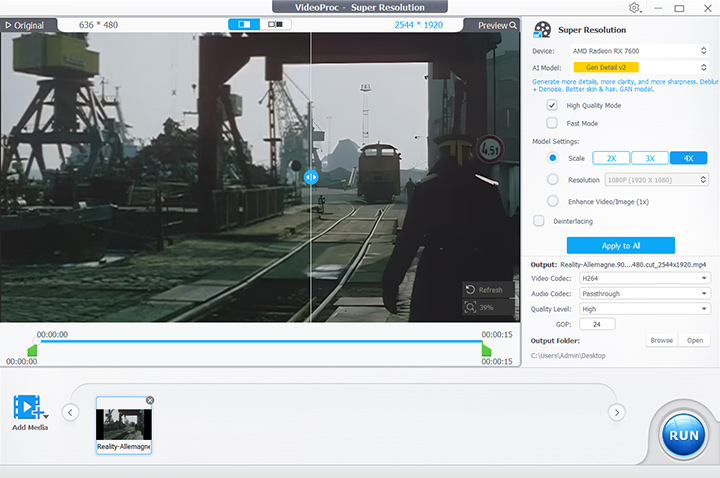
Navigating VideoProc was a breeze. It's crafted for simplicity, making it a hit for tech novices and seasoned video editors. Coupled with dynamical adjustments of the GPU memory footprint, it achieved the best efficiency and took only 57 seconds to upscale a 15-second, 24fps video four times. As for the results, let's just say it's like seeing your old videos in a new light – literally.
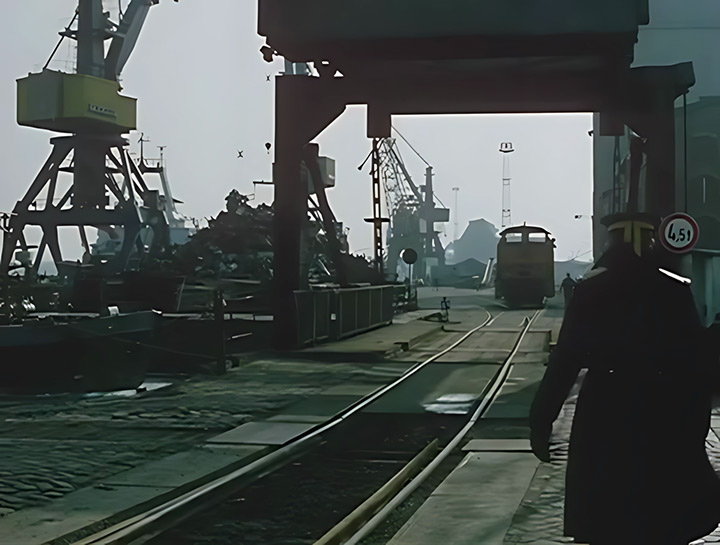
The upscaled image has more clarity and sharpness with finer and more discernible details. The overall quality is improved, with less graininess and better definition, particularly noticeable in the textures and edges around the gantry crane and the railway tracks. VideoProc gracefully enhances the quality, steering clear of those common upscaling pitfalls like blurring or weird artifacts. It's practical for restoring or repurposing older or lower-quality images.

Pros:
- Low system configuration requirements for more CPU and GPU models
- Efficient for old and grainy videos with batch processing support
- High-quality outputs up to 400% and 4K resolution for videos
- Lightweight, user-friendly, real-time dynamically adjusts and preview
- Regular ever-improving AI model updates with software upgrade
- Broad feature set, including AI video stabilization and frame interpolation
Cons:
- Lack of support for Linux systems
- The processing speed is not the fastest in my test. However, it delivers the most stable output results.
Final Verdict:
VideoProc Converter AI is an excellent choice for casual users and non-technical editors who want a simple, stable, and efficient AI video upscaler without needing a high-end computer. It delivers good sharpness and detail recovery while maintaining a user-friendly interface and reasonable processing speed. Its low system requirements and batch processing support make it practical for everyday use.
2. AVCLabs Video Enhancer AI
- Time Taken: ~61 seconds
- Avg. Processing FPS: ~5.967 frames per second
- Max Output Resolution: 8K
- Min GPU Requirement: Intel HD Graphics 4600 (4th-generation core) / NVIDIA GeForce GTX 650 or higher
- Pricing: $95.96/year for 1 PC; $149.90 lifetime for 1 PC
- Ideal for: People with a stronger GPU/CPU who are okay with higher system requirements and don't mind trial watermarks while testing.
If you search Topaz Video AI alternative on Reddit, AVCLabs is likely to be on the list. AVCLabs Video Enhancer AI includes multiple AI tools and can efficiently upscale videos to HD, 4K, and 8K resolutions. In our tests, it was only 4 seconds slower than VideoProc Converter AI when upscaling the same video four times. It's worth mentioning that this program also has a facial detail recovery function.
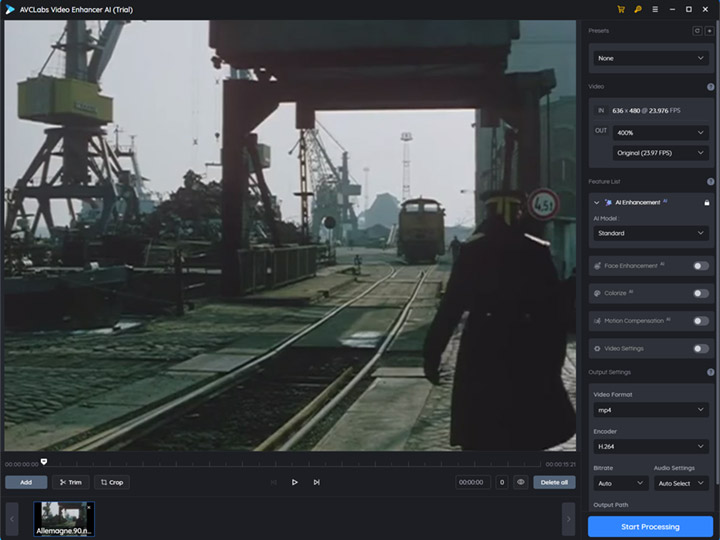
Here's what we get from the upscaling. Excluding the watermark, the quality of this image maintains clarity and sharpness. It makes the details of the industrial setting more visible. And the overall image quality is preserved.
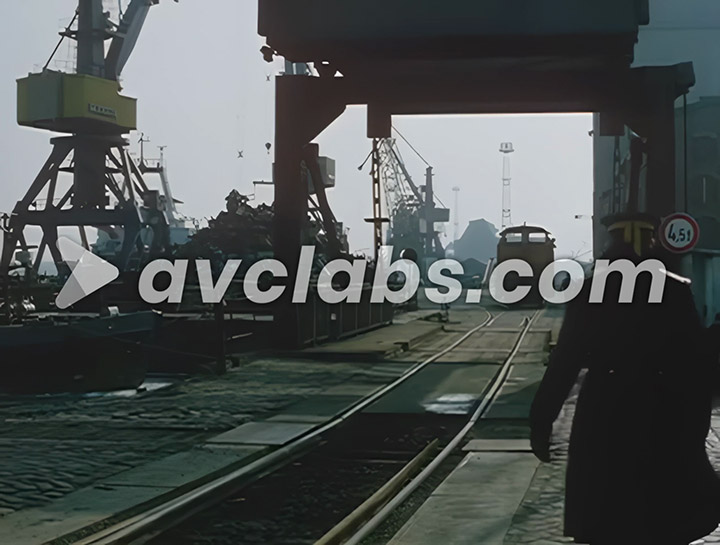
However, please note that AVCLabs Video Enhancer AI demands more robust hardware for video upscaling. You need to consider the higher system requirements before committing. Furthermore, it seems to be optimized primarily for NVIDIA cards; in my tests using an AMD card, GPU utilization remained at only around 10% throughout the process.
Pros:
- Streamlined interface with customizable new workflow
- Lots of features, including face refinement, colorization, motion compensation, etc.
- Batch processing is supported.
Cons:
- Huge trial version watermark
- It doesn't allow using different settings for each image when processing in bulk.
- Much higher hardware requirements, potentially slower processing times
Final Verdict:
AVCLabs Video Enhancer AI works well for users with stronger NVIDIA GPUs who want higher maximum resolutions up to 8K. It produces clear and sharp results with good detail recovery. However, it comes with higher system demands, a large trial watermark, and less efficient performance on AMD cards, making it less ideal for beginners or those with mid-range hardware.
3. Video2X
- Time Taken: ~94 seconds
- Avg. Processing FPS: ~3.872 frames per second
- Max Output Resolution: 4K
- Min GPU Requirement: Intel HD Graphics 4000 / AMD Radeon HD 7000 series / NVIDIA GeForce GTX 600 or newer
- Pricing: Free
- Ideal for: Hobbyists, especially those interested in anime or stylized content, who want a completely free, open-source solution and are comfortable tinkering with settings and multiple AI models.
For those looking for an accessible yet powerful upscaling solution, Video2X, the free and open-source Topaz Video alternative on GitHub is a distinctly unique option. Video2X includes a range of AI models like waifu2x and Anime4K for different upscaling needs. The rewritten Video2X project now features a new Windows GUI and installer, making it much cleaner and easier to use. If you don't have a powerful GPU of your own, you can still use Video2X for free on Google Colab.
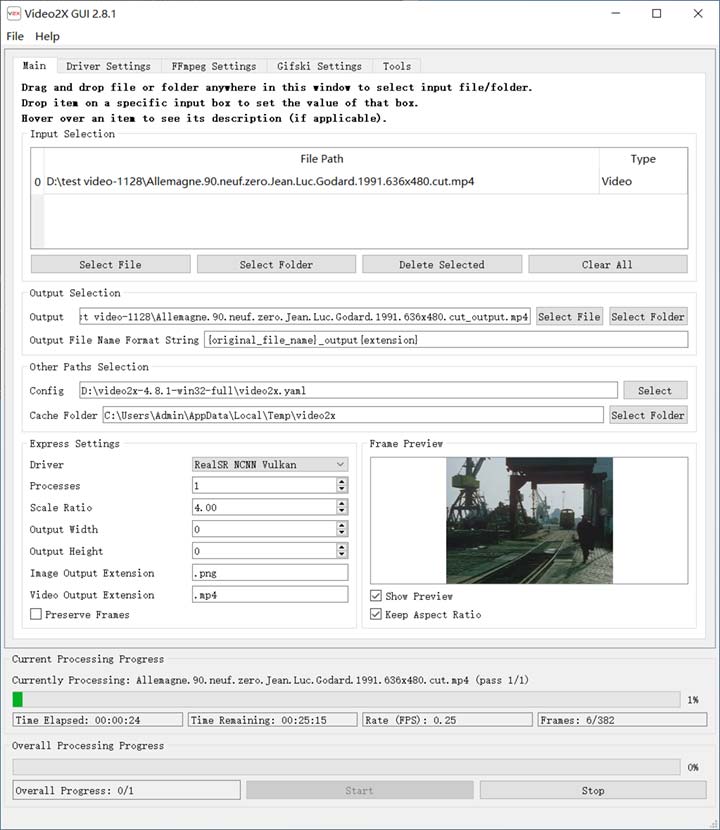
Video2X offers three upscaling filter options: libplacebo, Real-ESRGAN, and Real-CUGAN. All variants of Real-CUGAN and libplacebo are applicable to anime or cartoon videos. So here's a quick heads-up: if you are upscaling real-life videos, you can only choose the realesrgan-plus model within Real-ESRGAN, which is limited to a 4x scaling factor. Additionally, there is no "1x" option available to improve image quality without altering the resolution.
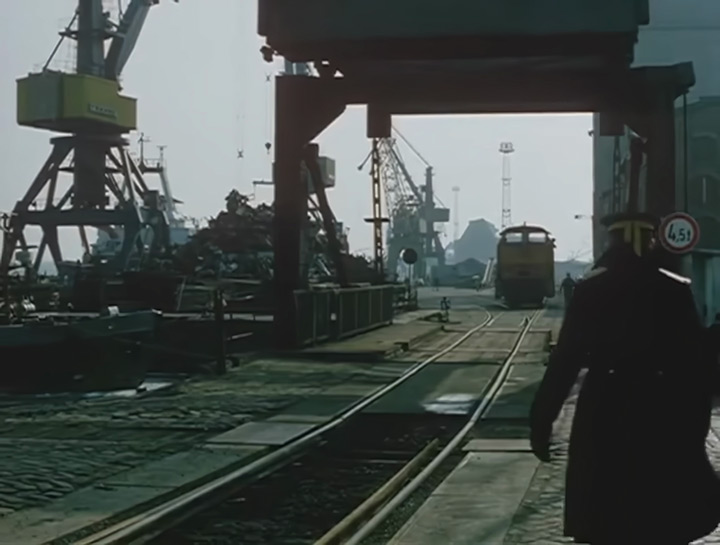
Compared with the first two sets of experimental results, Video2X's upscaling has a softer focus, and the details are not as sharp. The overall quality seems to have less definition in textures and edges. The colors also appear slightly more muted. In terms of speed, Video2X is quite slow when upgrading real-life videos. However, it shows an astonishing speed when upgrading anime-styled videos.
Pros:
- Open source, Topaz Video Enhance AI free alternative
- Various algorithm support based on machine learning
Cons:
- Not very fast processing speed on Windows
- A little bit of a learning curve
Final Verdict:
Video2X is ideal for hobbyists and users who mainly work with anime or stylized content. Being completely free, it offers a variety of AI models and can deliver decent upscaling results, especially for cartoons. That said, it tends to be slower on real-life videos, has a steeper learning curve, and produces softer, less sharp results compared to paid alternatives.
4. Nero AI Video Upscaler
- Time Taken: ~35 seconds
- Avg. Processing FPS: ~10.4 frames per second
- Max Output Resolution: 8K
- Min GPU Requirement: AMD Radeon 500 series / NVIDIA GeForce GTX 900 series or higher
- Pricing: $84.95/year for 1 PC; $195.00 lifetime for 1 PC
- Ideal for: Users who prioritize rapid processing speeds and prefer a highly smoothed, heavily denoised look, provided they are willing to purchase the full version to bypass the restrictive trial watermark.
Similar to other Topaz alternatives, Nero AI Video Upscaler utilizes artificial intelligence models to multiply video resolution, clean up visual noise, and sharpen soft edges. The interface is relatively intuitive, including a clip selection feature before initiating the render queue without pre-cutting.
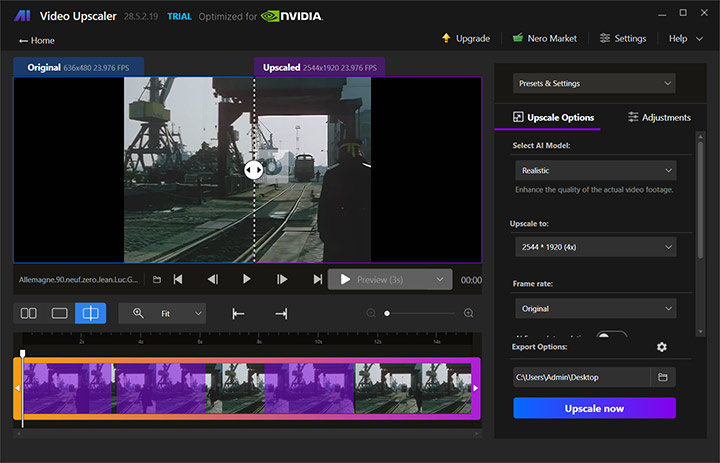
During my testing, Nero AI demonstrated impressive processing speed. When put to the task of upscaling the first test clip four times its original size, the software completed the process in roughly 35 seconds. This makes it one of the faster options in the lineup.
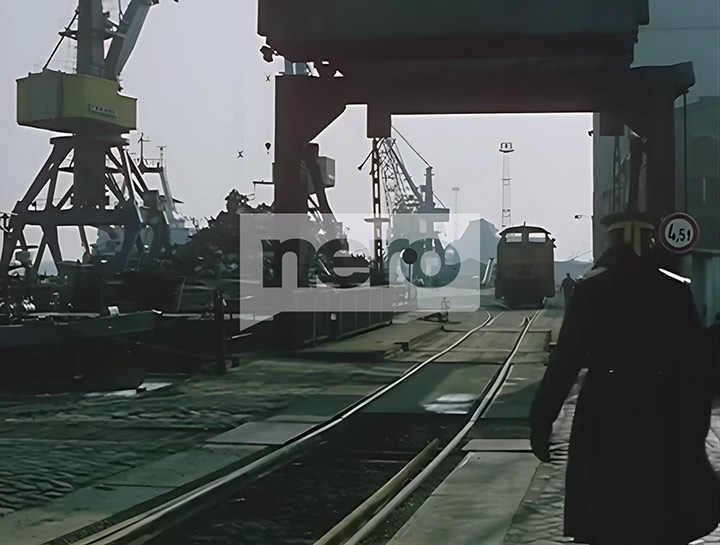
The output visuals, however, present a mix of aggressive enhancement and noticeable drawbacks. On the positive side, Nero AI significantly increases sharpness. It also applies heavy noise reduction, aggressively scrubbing away the film grain and fuzziness typical of the original source. Conversely, this processing introduces a distinctly artificial, plasticky, and somewhat painterly quality, smoothing over the authentic, gritty texture of the original film stock. It also struggles to recover detail in low-light areas, leaving deep shadows heavily crushed.
Pros:
- Very fast processing times compared to several competitors
- Straightforward, user-friendly interface
- Aggressively removes heavy film grain and visual noise
- Significantly sharpens soft edges and defines structural details
Cons:
- Over-processing results in an artificial, painterly, or plasticky look
- Loses the natural, authentic cinematic texture of the original footage
- Struggles with dynamic range, leaving dark shadows crushed
- The free trial applies a massive, highly intrusive watermark right in the center of the video.
Final Verdict:
Nero AI Video Upscaler is best suited for users who want aggressive noise reduction and sharpening on their old videos. It delivers quick results with noticeably enhanced clarity and edge definition. However, it often over-processes footage, giving it an artificial, plasticky, or painterly look that loses natural texture, and the trial version applies a heavy central watermark.
5. TensorPix
- Time Taken: ~214 seconds
- Avg. Processing FPS: ~1.701 frames per second
- Max Output Resolution: 4K
- Min GPU Requirement: -
- Pricing: Free plan with $3 per credit (~2 minutes of video); Paid plans from $12 per month or $66 per year, extra credit from $0.80 per credit.
- Ideal for: Very casual users who don't want to install software or prioritize convenience and web access over maximum sharpness, speed, or deep features.
TensorPix could be a solid choice if you are looking for a web-based solution. Just like any video upscaler online, TensorPix is quite novice-friendly and basically has no system requirements. As long as you register an account, you can get a few credits as a free trial. Of course, there are a variety of subscription plans if you use up the free credits.
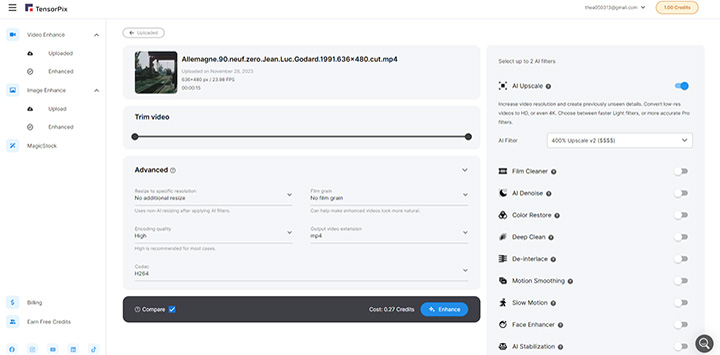
Without hardware support, the processing speed of TensorPix is quite slow actually. When processing the same video clips, it took four times as long as other desktop software. See the frame extracted from the upgraded video below.
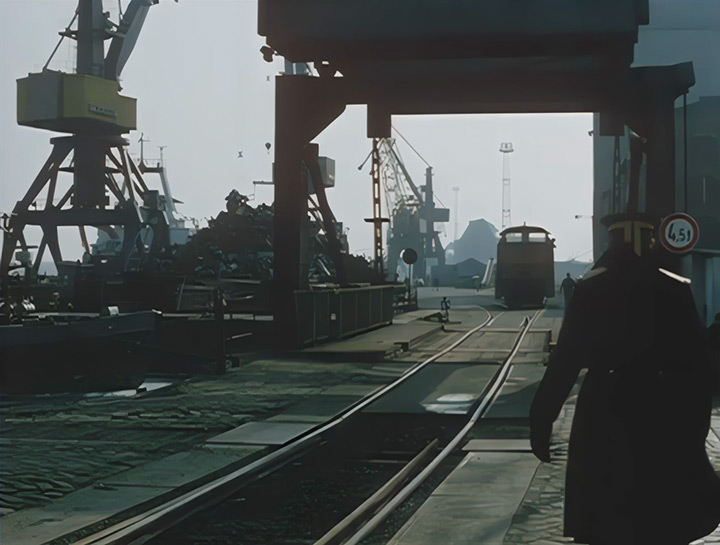
Compared to the previous images, the overall quality seems to be closer to the original. The details, while visible, are not as crisp. It doesn't exhibit the increased sharpness and clarity of the previous images from desktop software. I might rate it lower. It retains the authenticity of the initial photo but does not have the enhancements that come with upscaling processes.
Pros:
- Web-based with no software installation
- Easy to use with free trial
Cons:
- Very limited free trial with a watermark
- Limited upscaling quality and features compared to some desktop applications
Final Verdict:
TensorPix is a convenient option for very casual users who prefer a web-based tool with no software installation and minimal technical hassle. It produces relatively natural-looking results. On the downside, it is significantly slower than desktop programs and generally delivers less impressive sharpness and detail enhancement compared to dedicated desktop software.
Verdict
So that's it. This blog is intended to provide some Topaz Video alternatives based on real testing rather than simply listing the names. As you consider these options, remember the best choice depends on your specific requirements – be it budget, ease of use, or specific features. From the innovative web-based approach of TensorPix to the open-source flexibility of Video2X, there's a solution for every upscaling need.
VideoProc Converter AI is highly recommended. It doesn't come with a high price tag, yet still shows decent processing speed and output quality well above the average in our tests. It won't even put a huge watermark on the output videos with the trial version. Compared with other AI upscaling software, it requires minimal system configuration. No harm in trying. Feel free to download it and give it a shot.