
 VideoProc Converter AI
 New AI features are available




 Listed in
 Video remastering is the process of enhancing the quality of your videos, making them look and sound their best. Many videos, whether old recordings on VHS or MiniDV tapes, DVD clips, downloaded low-resolution files, or even modern footage shot on phones or cameras under challenging conditions, can suffer from issues like low resolution, blur, noise, grain, haze, JPEG artifacts, shakiness, or low frame rates. These imperfections make the footage appear less polished and reduce overall viewing quality. No worry, however, I'm going to share with you 6 methods to remaster a video to achieve up to 4K/8K crispy quality.
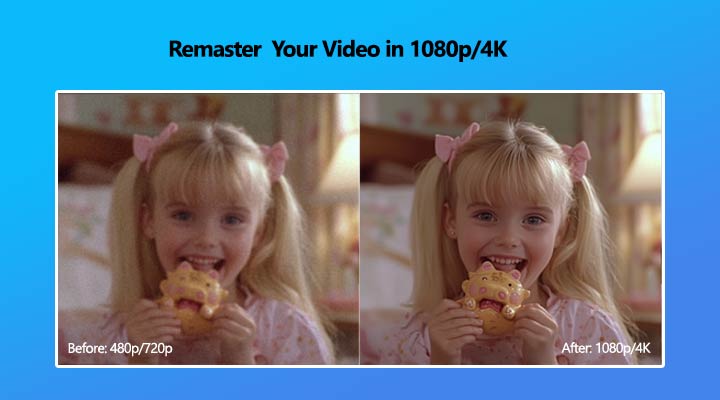
What Is Old Video Remastering
Video remastering is the process of enhancing the quality of video footage, making it look sharper, clearer, and more visually appealing. It can apply to both old recordings—like VHS or MiniDV tapes, DVD clips, or downloaded low-resolution files—and newer footage shot under challenging conditions, such as low light or shaky handheld shots. The process typically involves improving resolution, reducing noise, removing compression artifacts, correcting colors, stabilizing shaky frames, and converting older formats to modern, widely supported standards.
Remastering a Video: AI vs. Traditional Methods
Once you understand what video remastering is, the next question is how to do it. Broadly, there are two approaches: traditional video editing and AI-powered video remastering.
Traditional software like Adobe Premiere Pro or DaVinci Resolve gives you precise, frame-by-frame control over color, sharpness, noise, and stabilization. This is ideal for archival work, cinematic projects, or high-end restoration where attention to detail matters. However, these methods are time- and labor-intensive and cannot create new details that don't exist in the source footage.
AI-based video remastering, on the other hand, automates much of the process while delivering impressive results. Using deep learning models, AI can analyze each frame to restore lost details, reduce grain and noise, fix blur and compression artifacts, and upscale footage to 1080p/4K. It handles complex imperfections that would take hours—or even days—to correct manually. The result is high-quality, natural-looking videos with improved clarity, vibrant colors, and smooth motion, all achievable with just a few clicks.
Remaster a Video in 4K (Using AI)
Basically, any video that looks less than ideal could benefit from being remastered with AI. This includes VHS or MiniDV tapes, DVD clips, downloaded low-res files, shaky handheld recordings, low-FPS home videos, and more. Unlike manual editing, which can take hours and still struggle to recover fine details, AI can help remaster videos into sharp, 4K-ready quality with minimal effort. It intelligently analyzes each frame, enhances textures, removes imperfections, stabilizes shaky footage, and even reconstructs missing information that would be almost impossible to remaster manually.
# How to Remaster a Video in 4K: Easy Steps
Here's how you can do it using VideoProc Converter AI as an example, since its one of the most beginner-friendly and cost-effective tools, and similar steps apply to most AI video enhancers. Before getting started, download and install it from the link below.

Step 1: Select the Remaster Feature
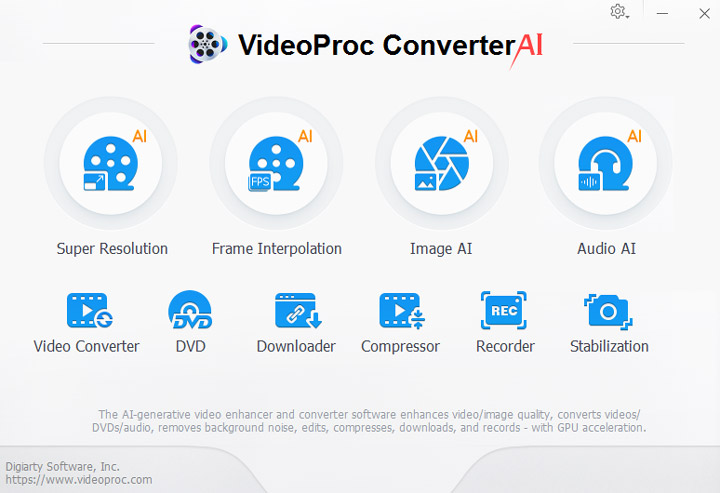
For this tutorial, I'll focus on Super Resolution, which enhances clarity, resolution, and details while fixing grain, noise, compression artifacts, and other imperfections. It also lets you upscale from 1080p to 4K while preserving textures. To start, hit the Super Resolution option and drag your source video into the program.
Tips:
Depending on what you want to remaster in your video, you can also choose:
- AI Stabilization: Reduce shake in handheld or jittery footage.
- Frame interpolation: Boost the frame rate of low-FPS footage to make playback smoother.
- Audio AI: Remove background noise from audio tracks.
- Video Converter: Adjust the brightness and other color settings to make the old video appear more vivid.
Step 2: Remaster Your Video
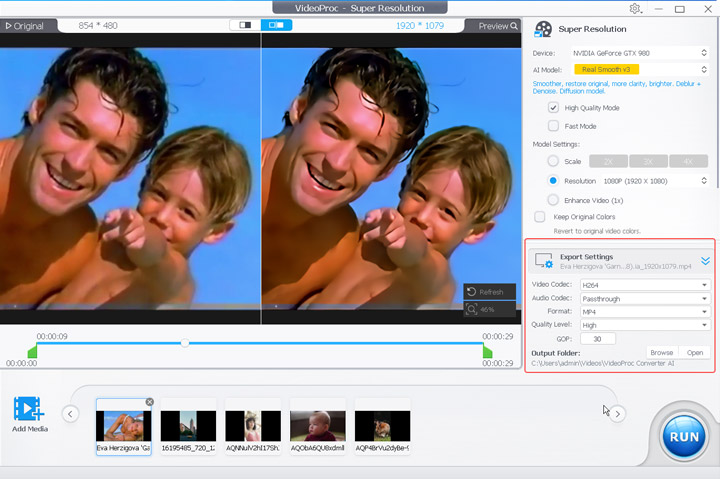
Choose one of the four AI models and set your target resolution. You can upscale by 2X, 3X, or 4X, or export to a standard resolution such as 1080p or 4K.
In my tests, Real Smooth v3 worked better for noisy or compressed videos, while Gen Detail v3 was better for clips with visible textures, such as hair, fabric, text, or object edges.
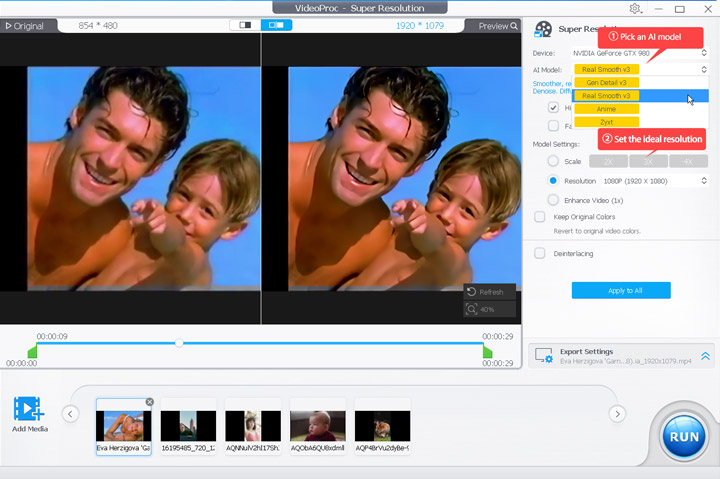
Here are a few more before-and-after examples from different types of footage.
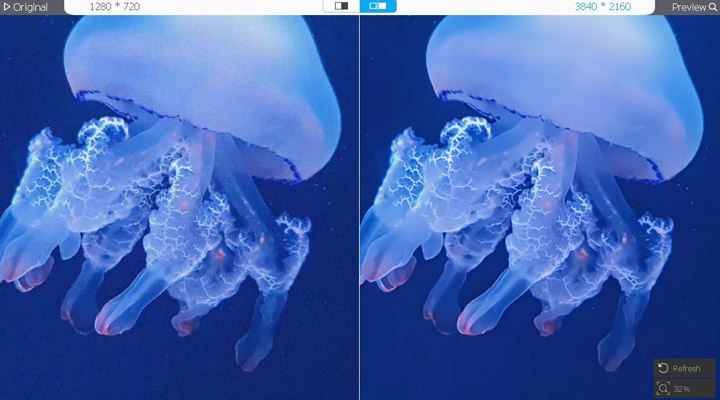
Test Footage 1: A low-resolution clip remastered with VideoProc's Gen Detail v3 and upscaled by 2 times of the original resolution . The result looks cleaner, with more defined edges and less muddy detail.
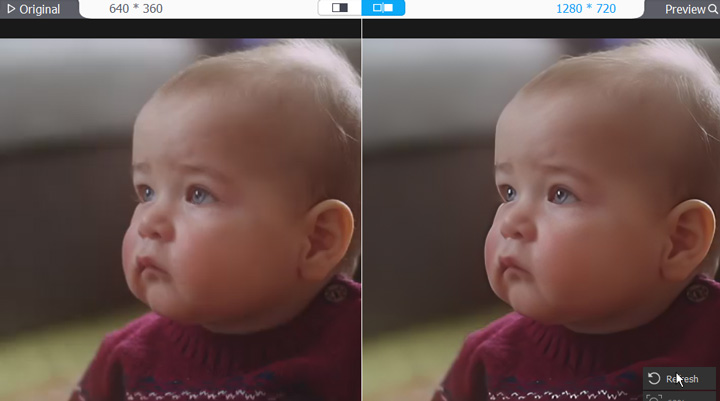
Test Footage 2: A noise-looking clip enhanced with a detail-focused model. Fine textures become easier to see, while the result still looks natural.
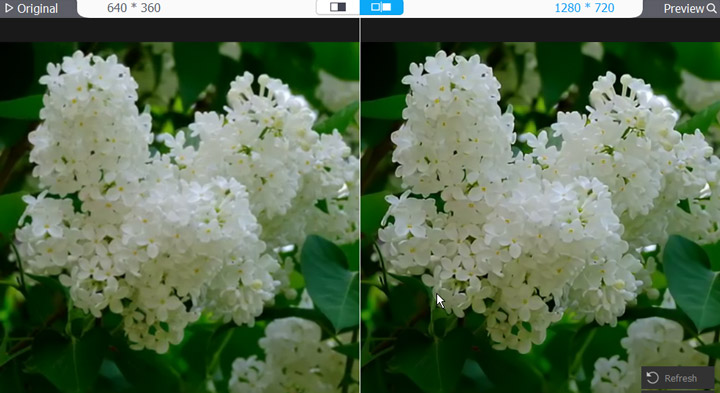
Test Footage 3: A noisy clip improved with VideoProc's Real Smooth v3 and upscaled by 3 times of the original resolution. The image appears clearer and more balanced without looking overprocessed.
Step 3: Preview and Export
Preview the result to ensure it looks natural, checking for halos, over-sharpening, or other artifacts. Once satisfied, export using modern codecs like H.264 or H.265, setting a higher bitrate to preserve as much detail as possible.
# AI Video Remastering Software: 5 Top Picks
1. Topaz Video
Price: Starting from $299 per year.
Topaz Video is an AI-powered video upscaler designed to improve the quality of old or low-resolution footage. Using advanced deep learning algorithms, it can upscale videos to 4K or 8K while minimizing noise, reducing compression artifacts, and restoring lost details. The software also enhances color, contrast, and overall visual aesthetics, helping older videos look sharper and more vibrant without compromising the original image or sound.
Topaz Video is particularly useful for remastering footage from sources such as VHS tapes, DVDs, or downloaded low-resolution clips, making it suitable for both personal archives and professional projects. Its ability to recover details, improve clarity, and maintain natural textures makes it a strong choice for anyone looking to restore old videos to modern viewing standards.

Key capabilities:
- Enhance video resolution and clarity up to 8K
- Reduce noise and remove compression artifacts
- Improve color grading and contrast for a polished look
Pros:
- Remaster videos in 4K/8K using AI upscaling algorithms.
- Diverse AI video enhancement controls to restore lost details.
- Supports batch processing.
Cons:
- Quite expensive.
- Heavy on computer resources.
2. VideoProc Converter AI
Price: Free (for videos under 5-min); $34.95 per year or $54.95 for lifetime.
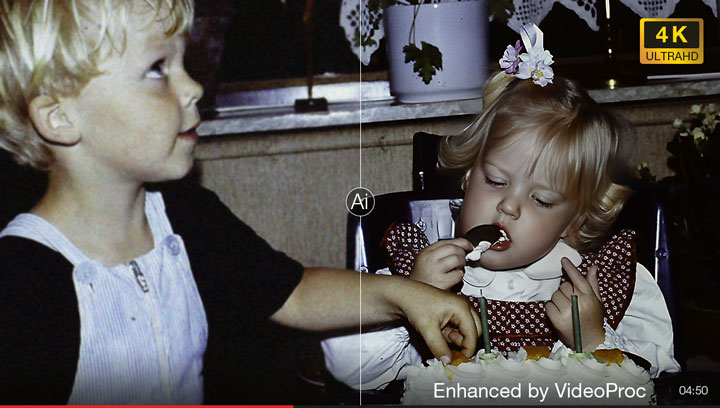
VideoProc Converter AI is a versatile AI tool for remastering videos to HD or 4K. Its Super Resolution feature uses deep-trained AI models to upscale footage by 2X, 3X, or 4X, enhancing low-resolution videos while reducing noise, grain, haze, and blur. It preserves natural details in aging or low-quality footage and enhances features such as skin texture, hair sharpness, fabric clarity, and other fine details. This makes it particularly useful for restoring content from sources like VHS tapes, MiniDV or Hi-8 recordings, DVDs, or downloaded low-resolution videos.
As an all-in-one media toolkit, VideoProc also adjusts color, including brightness and saturation, to make videos look more balanced and visually sharper. Additionally, it supports format conversion, file size reduction, and even downloading videos from online sources. Its extra AI features, such as frame interpolation to smooth motion and stabilization to reduce shake in handheld footage, make it easier to improve the viewing quality of older or low-quality videos with complex scenes, motion, or vivid colors.
Key capabilities:
- Improve video resolution, clarity, and fix imperfections
- Stabilize shaky footage
- Boost frame rate for smoother playback
Pros:
- Remaster videos into 1080p/4K with naturally enhanced details
- 4 deep-trained AI models to handle all kinds of videos with great results.
- Automatically fix blurriness, grain, pixelation, compression artifacts, and more.
- Stabilize shaky footage, increase FPS, remove audio noise, and more.
- Adjust color, brightness, hue, saturation, and other settings to improve your videos.
- A complete toolbox: convert, compress, edit, download, and more.
Cons:
- Cannot run directly in your browser.
3. AVCLabs Video Enhancer AI
Price: $39.95 for one month, $119.95 for one year, or $299.90 for a lifetime license
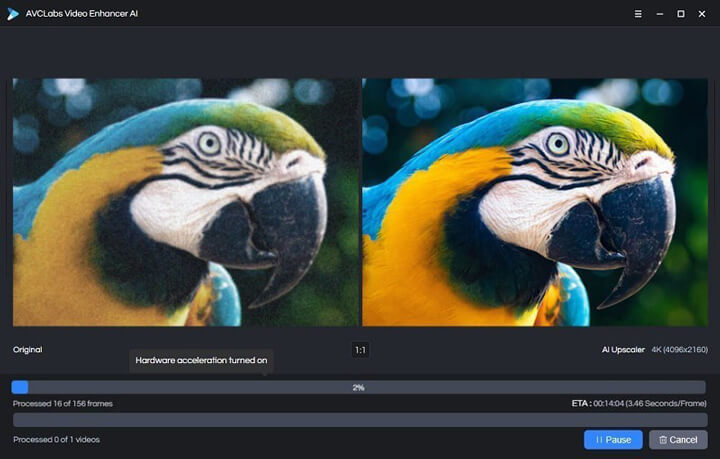
AVCLabs Video Enhancer AI is an AI-powered tool for improving the resolution and clarity of old or low-quality videos. By intelligently filling in missing pixels, it can upscale footage from 720p or 1080p to 4K or even 8K while reducing noise, smoothing edges, and correcting blur. It also offers color adjustments, scratch removal, de-interlacing, and other enhancements, making it suitable for remastering videos from a variety of sources, including VHS tapes, DVDs, downloaded low-resolution files, and other older formats.
Its user interface is straightforward and intuitive, with minimalistic controls that make the software easy to use. The remastering process is simple: load your video, preview the results, and click Start to enhance your footage with AI.
Key capabilities:
- Upscale video to 4K/8K with enhanced details
- Colorize black-and-white and faded footage
- Increase frame rate to 120fps and beyond
- Stabilize shaky footage
Pros:
- Remaster old videos using artificial intelligence.
- Targets a diverse array of larger resolutions, from 720p and 1080p to 4K and even 8K.
- Denoise, deinterlace, deblur, color correction, scratch removal, face blurring, and more.
- Supports various video formats and can work with videos from different sources.
Cons:
- Requires a relatively powerful computer for best performance
- Offers limited manual customization compared with professional video editors
4. Unifab Video Enhancer AI
Price: $59.99 for one month, $79.99 for one year, or $159.99 for a lifetime license.
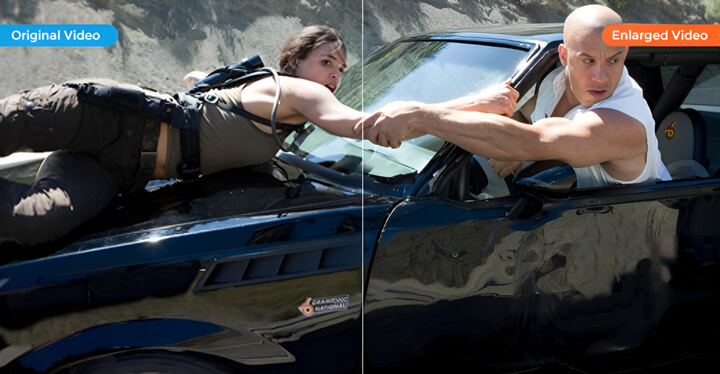
Unifab Video Enhancer AI makes it easy to remaster a video, bringing older or low-resolution footage up to modern standards. It can upscale videos to 1080p, 4K, or even 8K, while automatically reducing noise, correcting color, stabilizing shaky footage, and handling interlaced formats. This makes it perfect for VHS tapes, DVD clips, low-resolution downloads, or any video that needs a cleaner, smoother, and more polished look.
The interface is also simple and beginner-friendly. You can quickly load a video, select the improvements you need, preview the changes, and export the enhanced version without navigating complex menus. Its combination of AI upscaling and quality-restoration tools makes it particularly useful when you want fast, reliable results without manually adjusting every setting.
Key capabilities:
- Upscale videos to 1080p, 4K, or 8K.
- Reduce noise, stabilize footage, correct colors, and deinterlace.
- Beginner-friendly interface with straightforward controls.
- Works well with older formats like VHS, DVDs, or downloaded low-res videos.
Pros:
- AI upscales videos to 1080p, 4K, or 8K.
- Automatically reduces noise, stabilizes shaky footage, corrects color, and deinterlaces—great for VHS, DVDs, or low-res clips.
- Simple, beginner-friendly interface for quick preview and export.
Cons:
- Paid software; requires installation.
- Limited advanced settings for professional users.
5. Clideo
Price: Free
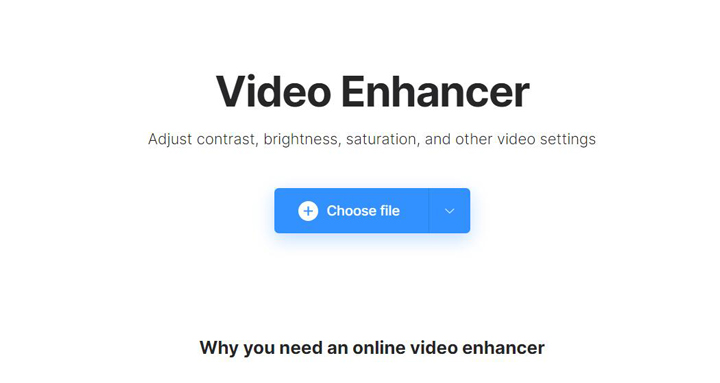
Clideo is a free online tool for improving video quality without the need to install any software. It can enhance old or low-resolution videos by automatically adjusting brightness, contrast, and saturation, giving your footage a clearer and more balanced look. Because it works entirely in the browser, it's ideal for quick fixes or for users who don't want to deal with complex software.
In addition to basic enhancement, Clideo also offers simple editing tools, allowing you to crop, trim, or adjust your videos while you remaster them. While it may not have the advanced AI upscaling capabilities of desktop programs, it's a convenient option for casual projects or small clips.
Key capabilities:
- Improve brightness, contrast, and color balance
- Browser-based, no installation required
- Basic editing tools: crop, trim, and adjust videos
- Best for quick, casual enhancements of small clips
Pros:
- A free solution to remaster video online.
Cons:
- Limited features to remaster video compared to other video remastering software.
- A stable internet connection is required.
Remaster a Video with a Traditional Video Editor
A traditional video editors like DaVinci Resolve and Premiere Pro can help remaster videos by giving you precise, frame-by-frame control over color, noise, and image details. This makes them ideal for archival restoration, cinematic projects, or high-end content where accuracy and fidelity matter more than speed. You can adjust shadows, highlights, contrast, saturation, stabilize shaky footage, reduce noise, and manually touch up individual frames to recover the best possible quality.
However, these tools have their limits. They cannot automatically reconstruct missing details or upscale low-resolution footage the way AI video remastering tools can. If your source video is extremely blurry, grainy, or heavily compressed, or if you want to improve the resolution while enhancing fine details, professional video editors alone won't add new clarity as they can only refine what's already there.
How to Remaster a Video with a Traditional Video Editor
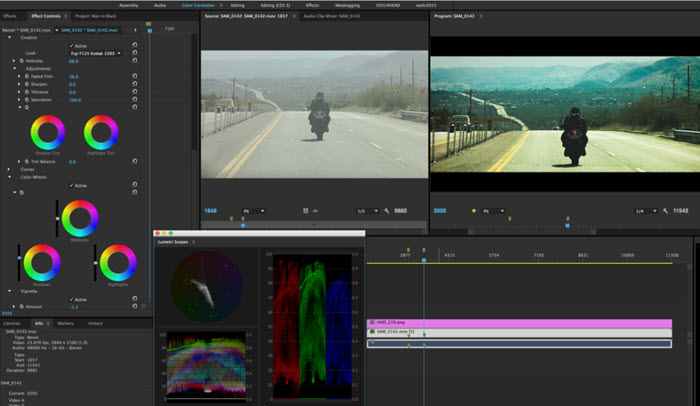
Here's how you can do it using Adobe Premiere Pro as an example
Step 1: Import Your Footage
Bring in the video you want to remaster. This can be old, low-resolution, or slightly degraded footage that needs improvement.
Step 2: Apply Noise Reduction
Use built-in Noise Reduction effects to remove grain and unwanted visual noise. This cleans up the footage while preserving natural details and textures, unlike some automatic AI smoothing which can blur edges.
Step 3: Adjust Sharpness and Colors
Apply the Unsharp Mask effect to enhance edge clarity. Then fine-tune contrast, saturation, shadows, and highlights to achieve a natural, balanced look. Advanced color grading can also help restore faded or discolored footage.
Step 4: Optional Stabilization
If your video is still shaky, you can apply additional stabilization. Keep in mind this is a resource-intensive process and may increase rendering time, especially for longer clips or higher resolutions.
Step 5: Export Your Remastered Video
Choose modern codecs like H.264 or H.265 to preserve quality, and set an appropriate bitrate to retain details. Save your file to the desired location for final output.