
 VideoProc Converter AI
 New AI features are available




 Listed in
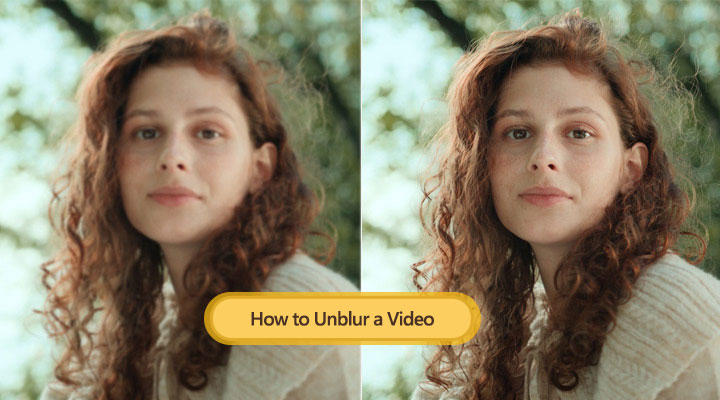
 Blurry videos can happen for many reasons. A clip may look unclear because it was recorded in low resolution, compressed too much by a messaging app, captured in poor lighting, slightly out of focus, or affected by camera shake. Sometimes, the problem is not just one type of blur, but a mix of low resolution, noise, pixelation, low contrast, and soft detail.
In this guide, we tested desktop AI video enhancers, mobile apps, and online video editors to see which methods can actually make blurry videos clearer. Some tools can restore detail and upscale low-resolution footage, while others are better for light blur, low contrast, or quick no-install fixes.
- Quick Answer: Which Video Unblur Method Should You Use
- Why Your Video Looks Blurry
- How We Tested These Video Unblur Tools
- Best Methods to Unblur Videos of Any Type
- 1. VideoProc Converter AI
- 2. Topaz Video
- 3. AVCLabs Video Enhancer AI
- 4. Remini
- 5. Kapwing
- 6. Clideo
- Tips: Other Online Video Clearers
- What Kind of Blurry Video Cannot Be Fully Fixed
- How to Avoid Blurry Videos Before Recording
- FAQs
Quick Answer: Which Video Unblur Method Should You Use
Different blurry videos need different fixes. A low-resolution video usually needs AI upscaling. A compressed video may need denoising and artifact reduction. A dark or flat video may only need color and sharpness adjustment. If your video has several problems at once, a desktop AI video enhancer is usually the better choice.
| Your situation | Best starting point | Why | Good options |
|---|---|---|---|
Your video has multiple problems, such as low resolution, pixelation, noise, compression artifacts, soft detail, or low contrast. |
Use a desktop AI video enhancer. |
Desktop AI tools usually offer stronger enhancement, better export control, and more features for serious blurry footage. |
|
You want a practical tool for everyday blurry videos, downloaded clips, old videos, phone footage, and low-contrast footage. |
Use an all-in-one AI video enhancer. |
It can combine AI upscaling, detail enhancement, denoising, sharpening, color adjustment, and basic editing in one workflow. |
|
You need professional-level video restoration and do not mind a high price or heavier workflow. |
Use a professional AI restoration tool. |
It gives more advanced AI models and fine-tuning options, but it can be expensive and hardware-demanding. |
|
You only need to improve a short phone video, selfie clip, or casual social media video. |
Use a mobile AI enhancer. |
Mobile apps are convenient for quick fixes, especially for short clips with faces or visible texture. |
|
Your video is only slightly blurry, dark, flat, or low-contrast, and you do not want to install software. |
Use an online video editor. |
Online editors can improve brightness, contrast, color, and sharpness, but they usually cannot truly restore missing detail. |
In general, use a desktop AI video unblurer when the video has serious blur, low resolution, compression damage, or multiple quality issues. Use an online editor only when the video is slightly blurry, flat, or low contrast. Use a mobile app when you want to quickly improve a short phone video.
Why Your Video Looks Blurry
Before choosing a video unblur tool, it helps to understand what kind of blur you are dealing with. Different problems need different fixes, and many videos have more than one issue at the same time.
1. Low-Resolution or Pixelated Video
Low-resolution videos, such as 360p or 480p clips, often look soft or blocky because there are not enough pixels to show fine detail. If the video was downloaded, cropped, or sent through a messaging app, compression can make the problem even worse.
For this type of blur, simple sharpening is usually not enough. AI upscaling and detail recovery work better because they can increase resolution and rebuild clearer edges and textures.
2. Compression Blur and Blocky Artifacts
A video may look blurry even if it was originally clear. This often happens after being compressed by social media platforms, cloud services, or messaging apps. You may notice blocky edges, muddy textures, color banding, or details that seem smeared together.
AI denoising, deblocking, and artifact reduction can help clean up the image and make the video look sharper.
3. Slightly Out-of-Focus or Soft Footage
Sometimes the camera does not focus correctly, leaving faces, text, or objects looking soft. If the footage is only slightly out of focus, AI enhancement and sharpening can improve clarity. But if the original video is completely out of focus, no tool can fully restore details that were never captured.
4. Low Contrast or Poor Lighting
Some videos look blurry because they are dark, flat, or washed out. In this case, the problem is not always missing detail. It may come from low contrast, weak lighting, or poor color balance.
Brightness, contrast, saturation, and sharpness adjustments can make this kind of footage look clearer. AI enhancement can also help if the video has noise or lost texture.
5. Camera Shake or Motion Smear
Shaky footage can create motion smear, especially in handheld videos or low-light scenes. Stabilization may help reduce unwanted camera movement and make the video look steadier. However, this is only one type of blur problem, so stabilization should be treated as an extra fix rather than the main solution for every blurry video.
How We Tested These Video Unblur Tools
To make the comparison more practical, we tested the tools with several common types of blurry videos:
| Test clip | Blur problem | What we checked |
|---|---|---|
Old 360p video |
Low resolution, pixelation |
Detail recovery, edge clarity, natural texture |
Compressed phone video |
Blockiness, artifacts, muddy detail |
Artifact reduction, denoise, overall clarity |
Soft portrait clip |
Slight focus blur |
Face detail, hair texture, skin texture, natural look |
Low-light indoor video |
Noise, low contrast, weak sharpness |
Brightness, contrast, noise control |
Shaky handheld clip |
Motion smear, camera shake |
Whether stabilization helped without over-cropping or distortion |
We also checked ease of use, processing speed, platform support, watermark limits, export options, and whether the final result looked natural or over-sharpened.
6 Tested Best Ways to Unblur Your Video
1. Use VideoProc Converter
- Platform: macOS and Windows
- Best for: low-resolution, pixelated, compressed, noisy, low-contrast, slightly soft, or shaky videos
- Not ideal for: users who want a browser-only tool with no software installation
- Rating: 9.8/10
 by One Hour Professor
VideoProc Converter AI uses deep learning to address the root causes of blurry or low-quality footage. Its Super Resolution technology can upscale low-resolution clips, such as 360p or 720p videos, to 4K by generating genuine detail instead of simply stretching pixels. This makes old, cropped, or low-resolution videos appear sharp and clear on 4K screens. The software includes four AI models designed to tackle different types of video issues.
In my tests, Gen Detail v3 and Real Smooth v3 are the most effective for turning blurry footage into clear videos while restoring fine textures like skin, hair, fur, and fabric. These models also fix common visual problems such as graininess, compression artifacts, and pixelation. For shaky, handheld footage, the AI stabilization feature reduces motion blur and smearing, producing steadier, sharper results without compromising detail. The software is also lightweight and automatically adjusts GPU memory usage, making AI video unblurring and upscaling less demanding on your system.

How to Unblur a Video with VideoProc Converter AI
Step 1: Download and launch VideoProc Converter AI, then click the Super Resolution tab on the home page.

Tips: If your video looks blurry due to shakiness, you can click the Stabilization feature, and then select an AI model to deshake your footage automatically.
Step 2: Import the videos you want to enhance by dragging them in or clicking the + / Add Media button. You can add multiple videos at once.

Step 3: Choose the AI model that best suits your video. From my tests, Gen Detail v3 and Real Smooth v3 deliver excellent results. You can try with they to see which works for your video best.
Step 4: Set the output resolution or scale: 2X, 3X, 4X, or choose a preset like 1080p, 2K, or 4K.
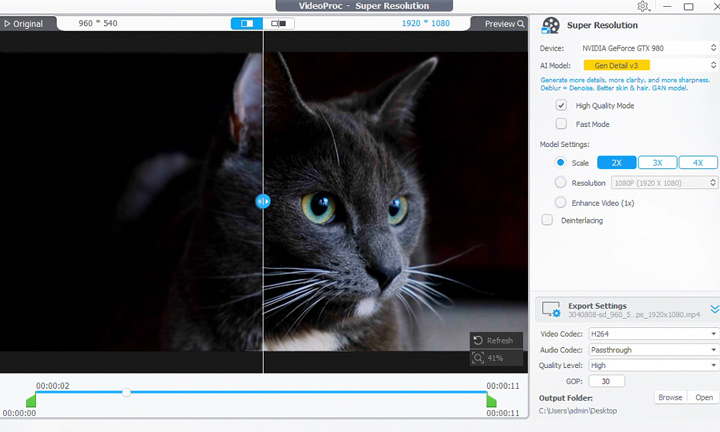
Step 5: (optional) Trim your video to enhance only a specific segment, adjust video/audio codecs, GOP, or output folder. Click Run to process your video and generate a clear, unblurred result.
Reasons to Use This Video Clearer:
- Handles multiple blur problems in one workflow
- Good for low-resolution, pixelated, noisy, compressed, and soft videos
- Supports AI upscaling and detail recovery
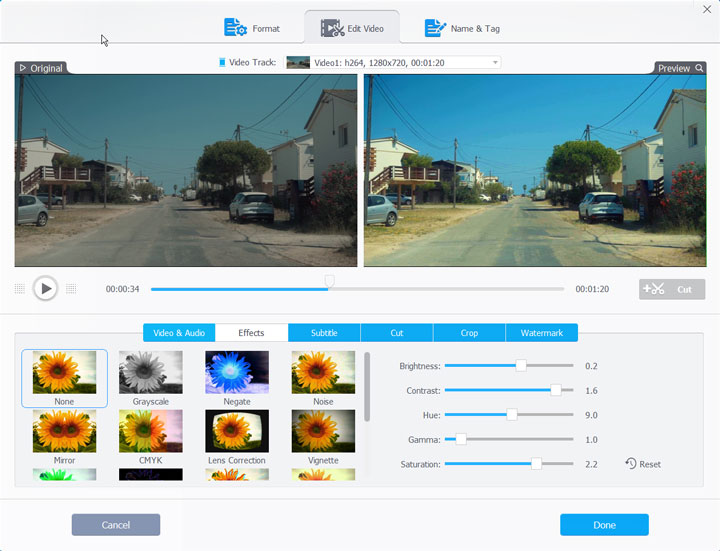
- Includes color adjustment for low-contrast or flat footage
- Useful for longer videos and batch processing
- Works locally on desktop, so you do not need to upload private videos online
Limitations to Keep in Mind:
- Requires software installation
- Cannot fully restore footage that is completely out of focus
How It Performed in Practice
In testing, VideoProc Converter AI noticeably improved low-res and compressed clips, making edges clearer and reducing the "muddy" look. I mainly used the v3 models. Real Smooth v3 worked better for noisy footage, while “Gen Detail v3” was better when there were still visible textures like hair or clothing. It also includes stabilization tools, which help fix shaky footage and reduce motion blur. On top of the AI features, there are quick color adjustment tools that slightly improve dark or low-contrast videos. However, when a video is heavily out of focus, improvements are naturally more limited, since there’s less original detail for the AI to build on.
[Test 1] Unblur an old blurry video with VideoProc.
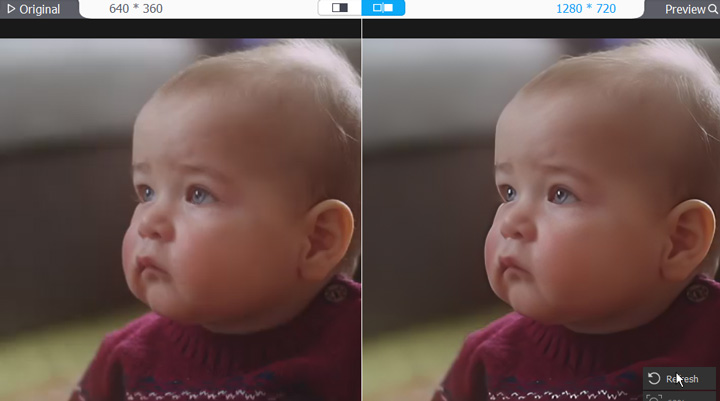
[Test 2] Unblur a heavily compressed video downloaded from Facebook with VideoProc.
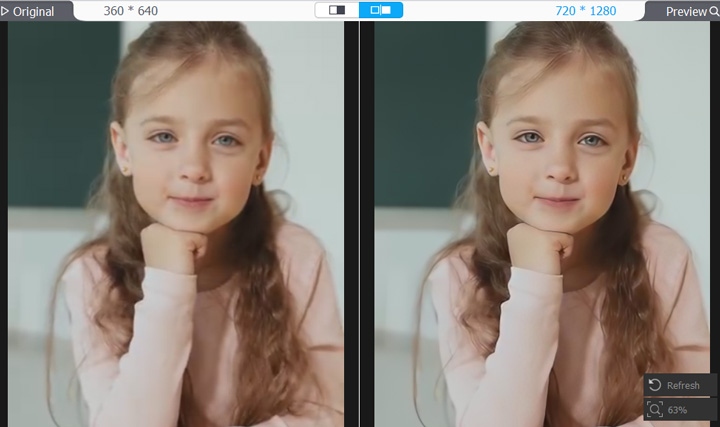
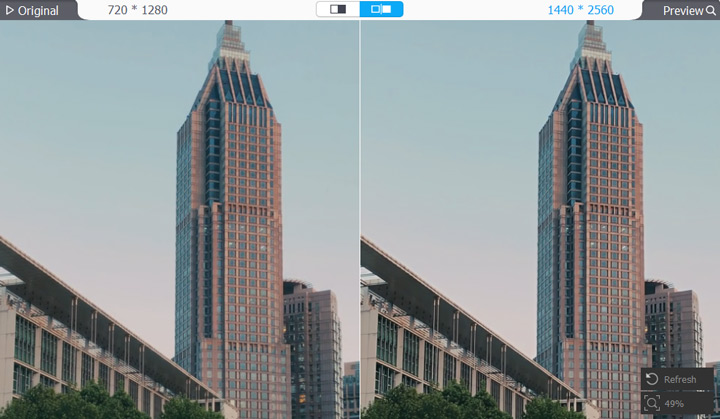
[Test 3] Make a blurry-looking building footage look clear with VideoProc
[Test 4] Make a dark, low-contrast blurry video clearer with color and sharpness adjustment.
2. Topaz Video
- Platform: Windows and macOS
- Best for: professional video restoration, old footage, low-resolution video upscaling, denoising, sharpening, and advanced AI enhancement
- Not ideal for: casual users who need a lightweight or budget-friendly video unblur tool
- Price: $299/year for the Personal plan, making it one of the most expensive tools in this list
- Rating: 4.1/5
 by TrustPilot
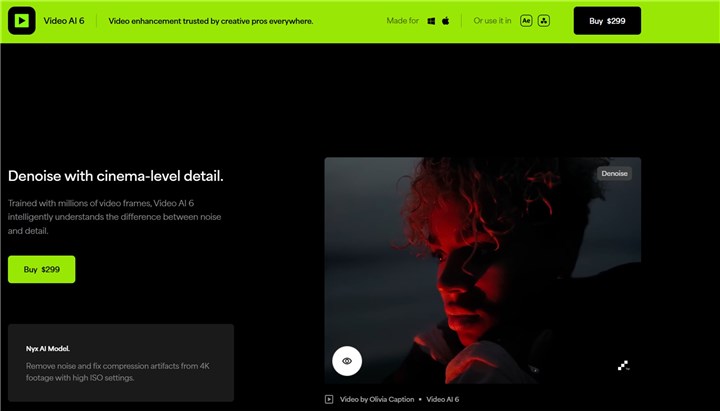
Topaz Video is a professional AI video enhancement tool for users who need high-end restoration rather than a quick casual fix. It is designed for tasks like upscaling old or low-resolution footage, reducing noise, sharpening soft details, restoring archival videos, and improving overall video clarity.
Compared with simpler video unblur tools, Topaz Video offers more advanced AI models and more control over the final output. It can be a strong choice for filmmakers, editors, archivists, and users working with valuable old footage. However, it is not the most practical choice for everyone. At $299 per year for the Personal plan, it is much more expensive than most casual video clearer tools, and it also requires stronger hardware and more processing time to get the best results.
For serious restoration projects, Topaz Video is powerful. But if you only want to make a blurry phone video, downloaded clip, or low-contrast video look clearer quickly, a lighter tool may be more cost-effective.
How to unblur a video with Topaz Video
Step 1: Subscribe to a monthly or annual Topaz Video plan, then download, install, and launch the software on your computer.
Step 2: Hit Create a project. Choose the local folder and name it. After that, you can hit Souce videos and choose your blurry videos that you want to make them look clear.
Step 3: Select the desired upscale resolution. Choose an AI model based on your footage. You can follow the on-screen guidance to pick a suitable model, or try different models to compare the results. In this test, I chose Artemis because it is designed to denoise and sharpen videos with visible quality issues.
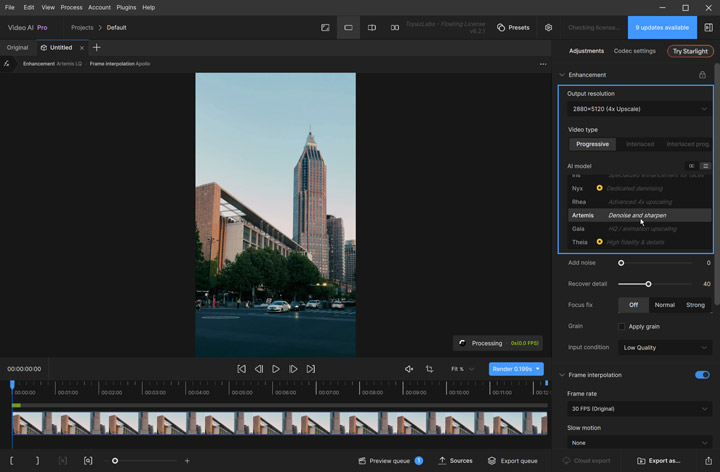
Step 4: Fine-tune the enhancement settings. Depending on your needs, you can select the original footage quality, adjust the Recover Detail slider, or add a second enhancement pass. Topaz Video offers many advanced settings, so it is worth previewing different combinations before exporting the final result.
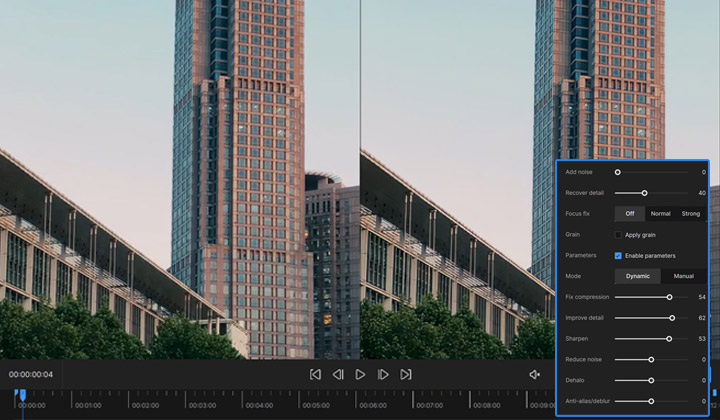
Step 5: Click Preview to process a short section first. If the result looks clear, natural, and not over-processed, export the enhanced video.
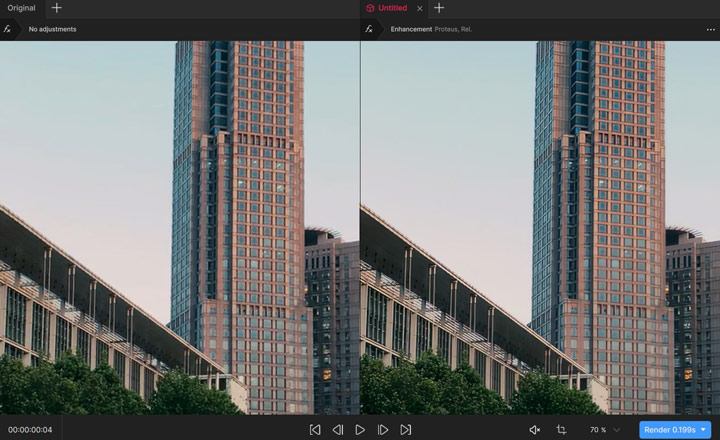
Why we picked it:
- Professional-level AI video enhancement software
- Strong option for old, low-resolution, noisy, or soft footage
- Offers advanced AI models for upscaling, denoising, sharpening, and restoration
- Suitable for editors, filmmakers, archivists, and serious restoration projects
- Works locally on desktop, which is better for large or private video files
Limitations:
- Very expensive for casual users, with the Personal plan billed at $299/year
- Requires stronger hardware for smooth AI processing
- Can feel too advanced if you only need a quick blurry video fix
- Processing can take a long time, especially for long or high-resolution videos
- Not necessary for simple low-contrast, slightly soft, or lightly blurry clips
How It Performed in Practice
For this test, I tried different AI models and settings instead of relying on one fixed preset. Artemis worked well on footage that looked noisy, soft, or compressed because it is designed to improve videos with visible quality issues. After previewing a short section, the enhanced video looked cleaner and sharper, with better edge clarity and less visible noise. From our test, it is not the best fit for most casual users. It can deliver impressive results on suitable footage, such as old, noisy, low-resolution, or archival videos. However, the improvement is not always dramatic. On lightly blurry, low-contrast, or badly out-of-focus clips, the result may look only slightly cleaner rather than truly restored. The price is the main issue. At $299 per year for the Personal plan, Topaz Video is very expensive if your goal is simply to unblur a phone video, social media clip, or downloaded video. It also requires stronger hardware and more time to process, which makes it feel too heavy for quick everyday fixes.
[Test 1] Unblur an old low-resolution video with Topaz Video.
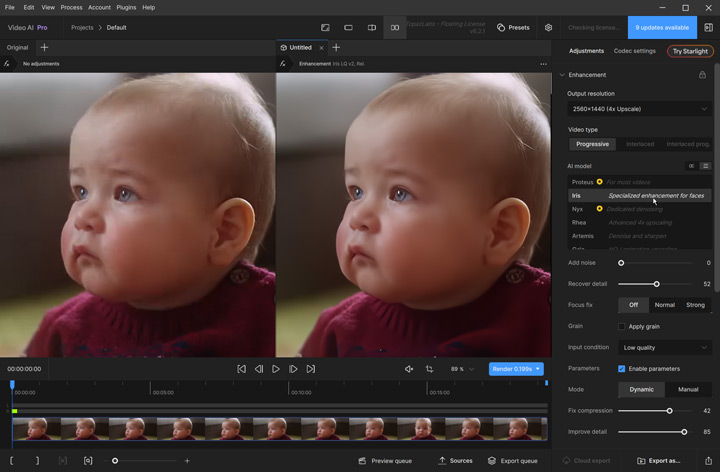
[Test 2] Sharpen soft footage with Topaz Video.
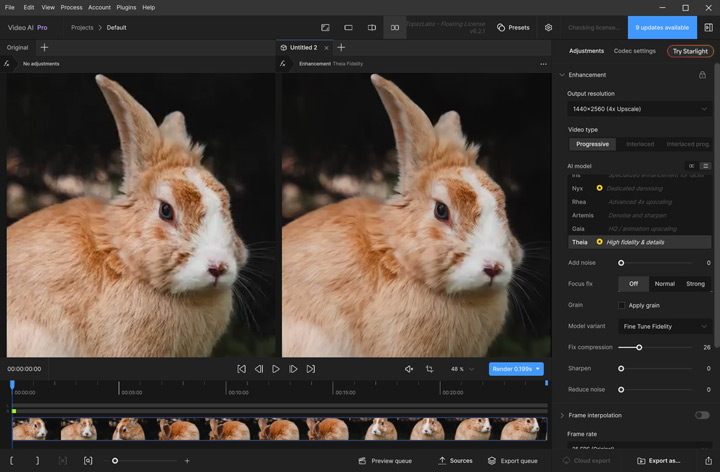
[Test 3] Preview different enhancement settings before exporting the final result.
2. AVCLabs
- Platform: Windows and macOS
- Best for: AI upscaling, denoising, sharpening, old video restoration, and desktop-based enhancement
- Not ideal for: users who need the fastest lightweight workflow or a simple free online editor
- Rating: 9.2/10 by Trustpilot
AVCLabs Video Enhancer AI is another desktop AI video enhancer for making blurry videos clearer. Compared with simple online video clearers, the desktop version is more suitable for serious enhancement tasks because it can process videos locally and offers a fuller AI workflow.
It can help with low-resolution footage, noisy clips, old videos, soft-looking images, and compressed videos. It also includes AI models for upscaling, denoising, enhancement, and stabilization. However, stabilization should not be treated as the main reason to use it for this topic. It is better to position AVCLabs as a dedicated AI video enhancer that can improve clarity across several types of degraded footage.
How to unblur a video with AVCLabs Video Enhancer AI
Step 1: Install and open AVCLabs Video Enhancer AI on your computer.
Step 2: Import the blurry, noisy, or low-resolution video that you would like to unblur it with AI.
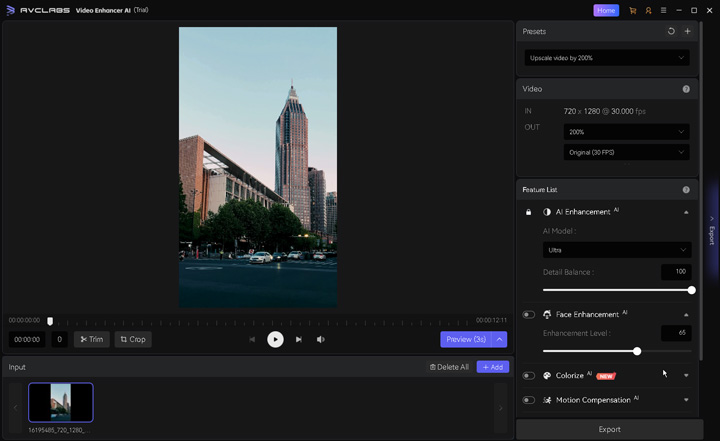
Step 3: Choose the proper AI model for your footage, such as enhancement, denoise, or upscaling.
Step 4: Select the output resolution. For low-resolution videos, you can upscale to 1080p, 4K, or higher if the source quality allows.
Tips:
You can also adjust the color settings to make the video look clearer. For example, we slightly increased the contrast and added a bit more sharpening, which helped bring out the edges and details.
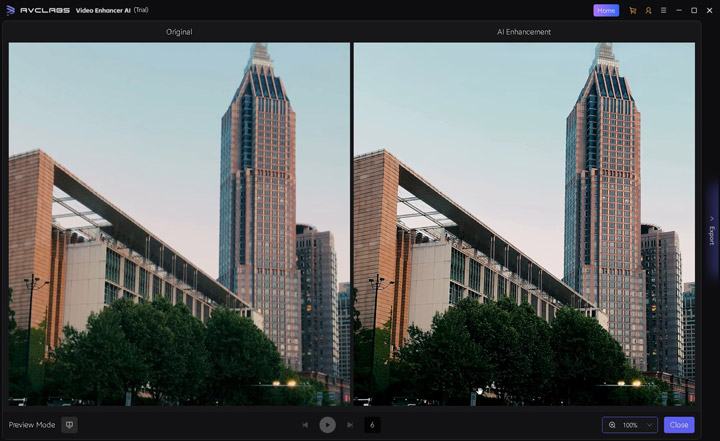
Step 5: Preview the result and adjust the settings if needed. Export the enhanced video when you're satisfied with the result.
Why we picked it:
- Dedicated desktop AI video enhancement software
- Better suited for serious blur than basic online editors
- Supports AI upscaling, denoising, and detail enhancement
- Can process videos locally without uploading them to a browser tool
- Good alternative when users want another AI enhancer option
Limitations:
- Processing can be slow on weaker computers
- May require more hardware resources than simple online tools
- Some outputs may look over-processed if settings are too aggressive
How It Performed in Practice
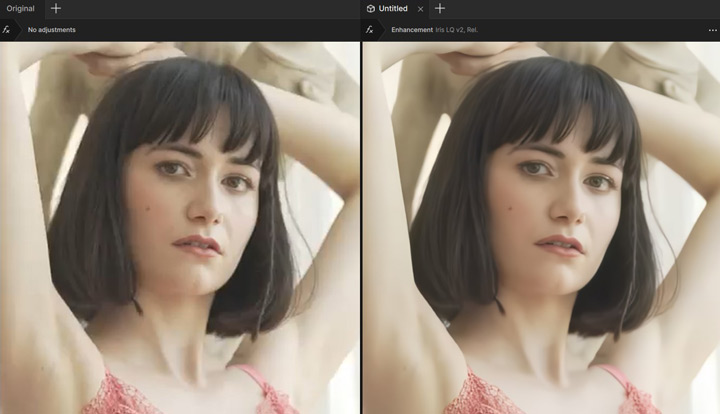
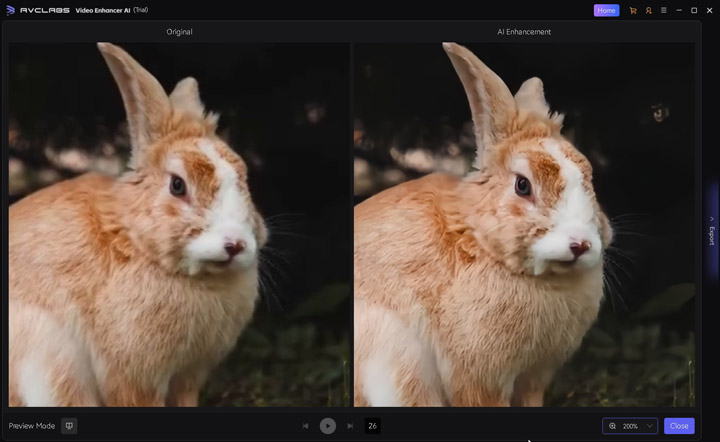
In our tests, AVCLabs Video Enhancer did not perform equally well on all blurry videos. The results were mixed. On some clips, especially blurry animal footage or videos where the subject had complex fur, fast movement, or unclear edges, the improvement was barely noticeable. The enhanced video looked slightly cleaner, but it did not truly recover much visible detail. It worked better on blurry videos where the main subject was a person. Face-centered clips, portrait videos, and old footage with visible human features showed more obvious improvement. Facial edges, skin texture, and overall clarity looked cleaner after enhancement, although the result still depended heavily on the source quality.
[Test 1] Enhance a blurry animal video with AVCLabs. The improvement was limited and not very obvious.
[Test 2] Unblur a portrait video with AVCLabs. The result was more noticeable on human faces and visible facial details.
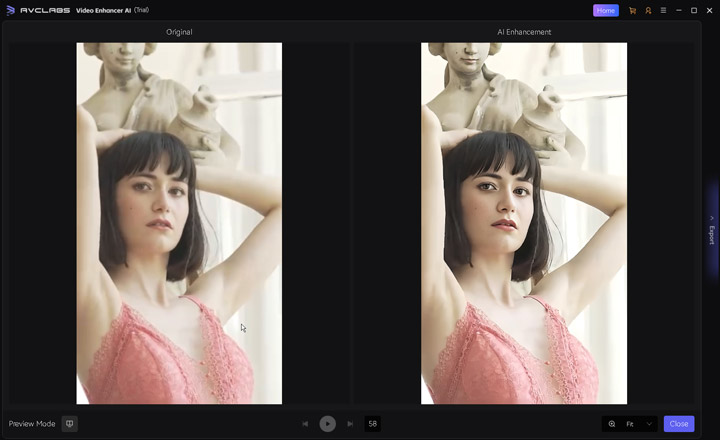
Note: One issue we noticed during playback was a slight jelly-like motion in some enhanced videos. This was not easy to show in a still screenshot, but the processed video could look a little unstable from frame to frame, likely because of temporal inconsistency between frames. For this reason, it is better to preview a short section before exporting the full video, especially when enhancing clips with movement, animals, or complex textures.
3. Remini
- Platform: iOS and Android
- Best for: short phone clips, selfie videos, portrait videos, and casual social media footage
- Not ideal for: long videos, batch processing, desktop workflows, or professional editing
Remini is a mobile AI enhancement app that can make short videos look clearer directly on your phone. It is especially useful for casual users who want to improve a selfie video, old p
Rating: 8.0/10  by Google Play
Remini is a mobile app that lets you quickly unblur and enhance videos directly on your phone. It uses AI to sharpen details, reduce noise, and generally make footage look clearer. The interface is simple and intuitive, so you can improve a video with just a few taps. This is perfect for casual users or creators who need quick results. In my tests, Remini works very well on slightly blurry or low-resolution clips, noticeably improving facial details, textures, and edges. For older or heavily compressed videos, the AI can make a dramatic difference, especially for short clips.
Remini's free version works well for quickly unblurring short clips, but it's not without its quirks. You'll run into multiple ads before and after editing, which can slow things down a bit. Longer videos can also take some time to process, so in my experience, it's best for clips that are just a few minutes long.
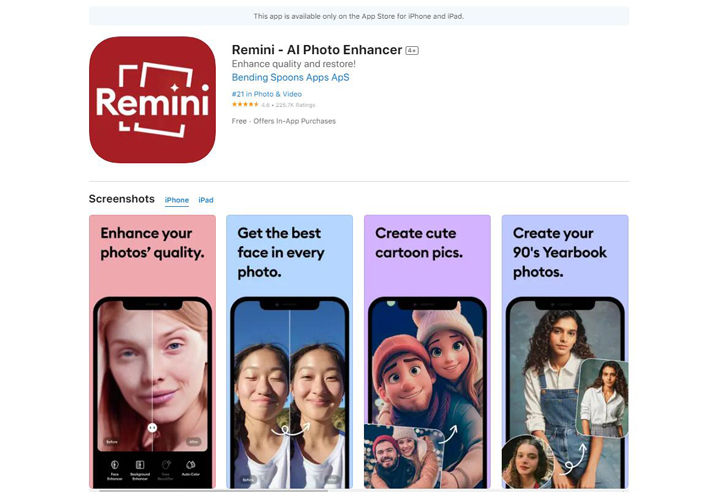
How to Unblur a Video on iPhone/Android
Step 1: Download and open Remini on your mobile device.
Step 2: Navigate to the Enhance feature. The app will automatically analyze your video and apply AI-powered sharpening, noise reduction, and clarity adjustments. You can preview the changes in real-time.
Step 3: Export and save the enhanced video to your device.
Why we picked it:
- Simple and intuitive interface for mobile users
- AI-driven enhancement can significantly improve slightly blurry or low-resolution videos
- Works directly on your phone, no computer needed
- Quick results for short clips
Limitations:
- Free version comes with intensive ads
- Processing can be slow for longer videos
- Cannot fully reconstruct heavily blurred or very low-resolution footage
- Outputs can sometimes look slightly artificial on extreme enhancements
4. Kapwing
- Platform: Online
- Best for: quick browser-based fixes, light blur, low contrast, brightness issues, and simple sharpening
- Not ideal for: serious pixelation, heavy blur, old video restoration, or AI detail reconstruction
- Rating: 8.6/10 by Product Hunt
Kapwing is not a dedicated AI video deblurring tool, but it can be useful when your video only looks slightly blurry because of poor lighting, low contrast, weak sharpness, or flat color. Since it works in the browser, it is convenient when you need a quick no-install fix.
For light blur, you can adjust brightness, contrast, saturation, and sharpness to make the video look clearer. This does not truly rebuild missing detail, but it can improve visibility and make edges stand out more.
Kapwing is best treated as an online editor for minor clarity improvement, not as a full AI video enhancer.
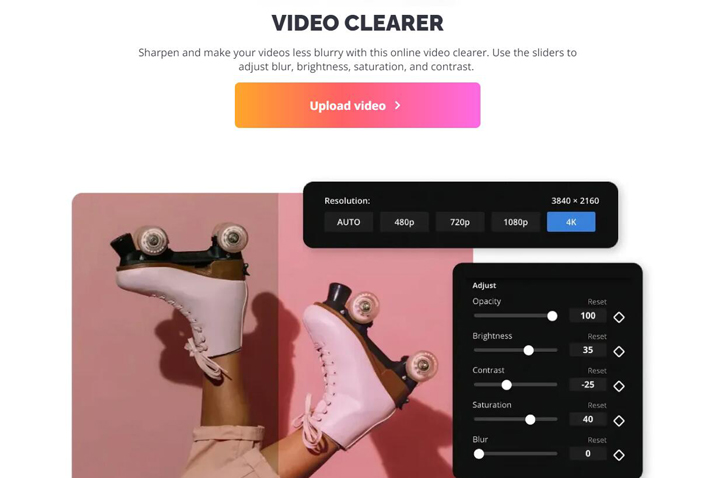
How to Unblur a Video Online with Kapwing
Step 1: Go to the Kapwing Video Clearer page and upload your video or paste a URL.
Step 2: In the editor, open the Adjust panel on the right. Improve clarity by adjusting brightness, contrast, saturation, and blur. You can also use built-in options for upscaling resolution and stabilizing footage to further reduce blur.
Step 3: Click Export Project to process and download your video.
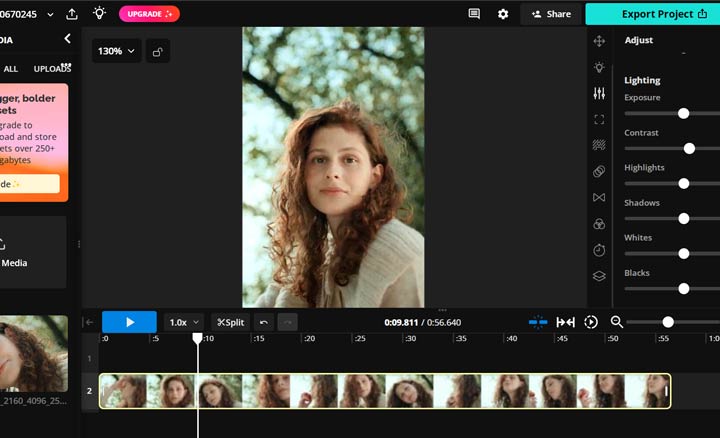
Why we picked it:
- Works in the browser
- Good for quick, light visual adjustments
- Useful for low-contrast or slightly soft footage
- Offers more editing flexibility than very simple online tools
Limitations:
- Not a true AI detail recovery tool
- Not ideal for serious blur or pixelation
- Online upload may not be suitable for private videos
- Free exports may have limits depending on current plan rules
5. Clideo
- Platform: online
- Best for: very simple brightness, contrast, saturation, and sharpness adjustments
- Not ideal for: serious blur, motion blur, heavy pixelation, or low-resolution restoration
- Rating: 9.2/10 by Trustpilot
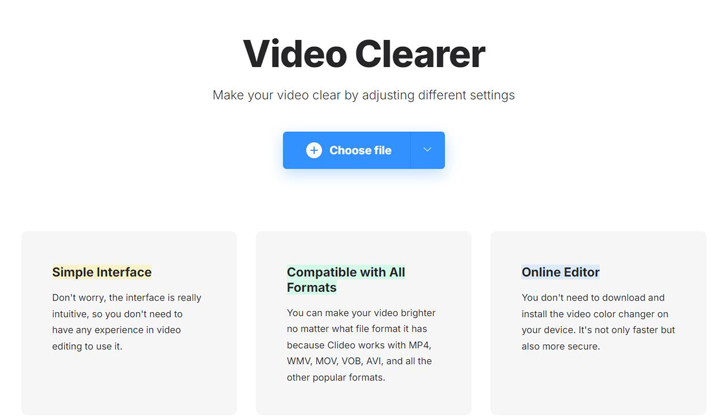
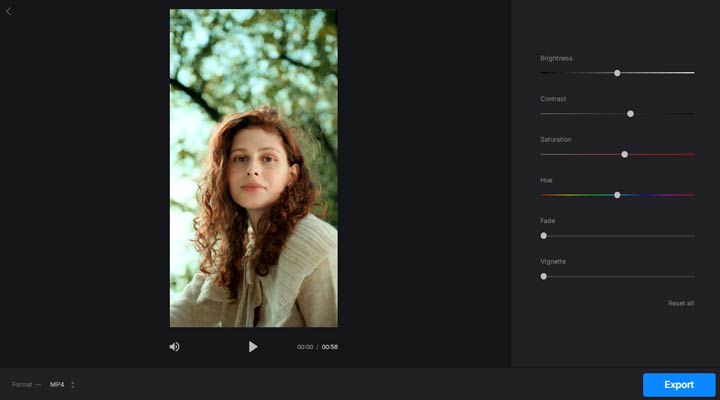
Clideo is a simple online video enhancer for users who only need basic visual adjustments. It can help when a video looks unclear because it is too dark, too flat, or slightly soft. You can adjust brightness, contrast, saturation, and sharpness to make the video easier to see.
However, Clideo should not be presented as a serious video unblur tool. It does not reconstruct lost detail like an AI enhancer, and it is not the right choice for badly pixelated, compressed, or out-of-focus footage.
How to Unblur a Video with Clideo
Step 1: Go to the Clideo Video Clearer page and click Choose File to upload your video.
Step 2: In the editor, adjust brightness, contrast, saturation, and other settings from the right panel to improve clarity.
Step 3: Click Export to process and download your improved video.
Why we picked it:
- Very simple to use
- No software installation required
- Good for quick low-contrast fixes
- Suitable for beginners
Limitations:
- Not AI-based detail reconstruction
- Not suitable for serious blur
- Online upload may not be ideal for private footage
- Limited control compared with desktop software
Other Online Video Clearers You Can Try
Some other online editors, such as Flixier, can also help with basic clarity adjustments. They may be useful if you only need to brighten a video, increase contrast, or apply light sharpening in the browser.
However, these tools are better treated as minor adjustment options rather than core video unblur solutions. If your video is low-resolution, heavily compressed, pixelated, noisy, or seriously soft, a desktop AI video enhancer will usually be a better choice.
What Kind of Blurry Video Cannot Be Fully Fixed?
AI video enhancers can improve many blurry videos, but they cannot perform miracles. Some footage cannot be fully restored, especially when the original video has no recoverable detail.
A video may be difficult or impossible to fully unblur if:
- The camera was completely out of focus
- The subject is too small or too far away
- The video is extremely low-resolution
- The clip has been compressed many times
- The motion blur is too severe
- The footage is too dark and noisy
- Important details were never captured in the original file
In these cases, AI tools may still make the video look cleaner or more watchable, but they cannot perfectly recreate the original scene.
How to Avoid Blurry Footage Before You Unblur a Video
If you're trying to unblur a video, it helps to start with better footage in the first place. While not every issue can be fixed later, a few simple habits can make a big difference in how sharp your video turns out.
1. Keep your camera steady whenever possible. Handheld shots are one of the most common causes of blur, especially in low light. Using a tripod or even just placing your camera on a stable surface can instantly improve sharpness.
2. Make sure your subject is in focus before you start recording. Autofocus doesn't always get it right, especially in tricky lighting, so it's worth double-checking or switching to manual focus if needed.
3. Lighting also plays a bigger role than most people expect. In darker environments, cameras tend to use slower shutter speeds, which can introduce motion blur. Shooting in well-lit conditions helps keep your footage cleaner and sharper.
4. It's also a good idea to record at a higher resolution when possible. Even if your video ends up slightly blurry, having more detail to begin with makes it easier for AI tools to restore clarity later.
And if your footage still turns out blurry, that's where the tools in this guide come in. AI video enhancers and even simple adjustment-based editors can help you unblur your video, depending on the type of blur you're dealing with.
FAQs About Unblurring Videos
Can you really unblur a video?
Yes, you can make many blurry videos clearer, especially if the blur is caused by low resolution, compression, noise, low contrast, or slight softness. However, if the original video is completely out of focus or has no visible detail, no tool can fully restore it.
What is the best way to unblur a video?
The best way depends on the blur type. For low-resolution, pixelated, noisy, or compressed footage, use an AI video enhancer. For light blur or low contrast, brightness, contrast, and sharpness adjustments may be enough. For short phone videos, a mobile AI app can be convenient.
How do I unblur a pixelated video?
Use AI video upscaling or super resolution. Pixelated videos usually need more than sharpening because the problem comes from low resolution or compression. AI upscaling can help improve edges, textures, and overall clarity.
How do I make a blurry video clearer online?
Use an online editor like Kapwing or Clideo if the video only needs light improvement, such as better contrast, brightness, or sharpness. For serious blur, a desktop AI enhancer is usually more effective.
How do I unblur a video on iPhone or Android?
Use a mobile app like Remini for short phone clips. It is convenient for casual videos, selfies, and portrait clips. For longer or more serious video restoration, desktop software gives you more control.
Can stabilization unblur a video?
Stabilization can help if the video looks blurry because of camera shake or motion smear. But it does not fix every type of blur. For low resolution, pixelation, compression artifacts, or soft focus, AI enhancement, upscaling, denoising, sharpening, or color adjustment may be more useful.
Can I unblur a video someone sent me?
Yes. Save the video first, then check why it looks blurry. If it is low-resolution or compressed, try AI upscaling. If it is dark or flat, adjust contrast and brightness. If it is slightly soft, use AI enhancement or sharpening. If it is shaky, stabilization may help.