

Best VR Video Converters: Convert Between Normal Video and VR Video
VR, short for Virtual Reality, is a simulated experience provided that is dissimilar to our real word, and it's a buzzword in recent years. Virtual reality creates a world where we can experience things that do not actually exist, making us feel as if we are in a parallel world. With it, we may explore the Africa Savanna, or back to ancient Egypt empire 2000 years ago… Fantastic as virtual sounds, yet the reality may be cruel.
To enjoy the true VR where you stand in a virtual world and interact with surroundings, you have to use professional equipments. For the stunt and marketing purpose, many platforms and content creators are using the idea of VR and 360 video interchangeably.
For instance, YouTube has dedicated VR video channels to host 360 videos, viewers can use fancy headsets or make do with the Google cardboard for the immersive experience of 360 VR videos. Facebook also supports 360 videos in feed. Users can drag around on the player and see 360 degree of the scene with bare eye.
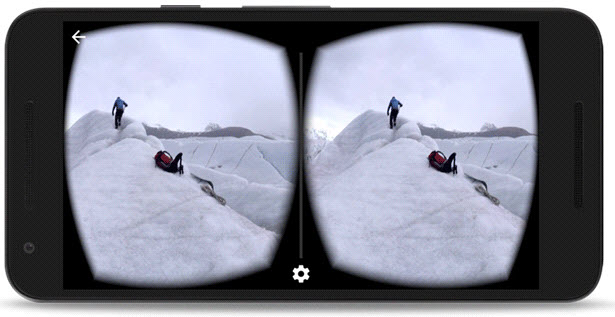
Can you convert a normal video to VR?
Yes, it is possible to convert a normal 2D video into a VR experience, but with several caveats. Most commercially available conversion tools don't recreate the full quality of native stereoscopic 3D or genuine VR 360°/VR180 production.
Instead, they simulate depth by generating a "stereo pair" from a 2D source. The result can let viewers wear a VR headset, or 3D glasses, to experience an illusion of depth and immersion.
If you are interested in DYI VR videos, without shelling out for the hardware (360 VR cameras), then you can try some of the following VR video converter software. Alternatively, if you don't like 3D videos, you can convert 3D to 2D normal videos.
Can you convert AI videos from 2D to VR video?
Yes. As AIGC is all the rage these days, I’ve seen many of you wondering whether it's possible to turn AI videos to VR, such as those private videos generated with Sora 2, Grok imagine, etc. With the VR converters, you can make it watchable with 180 degree SBS (Side-by-Side), 360 degree, or top bottom formats.
What features should I look for in a VR video converter?
- • Support common formats such as MP4 and MOV.
- • Offer multiple VR modes like 360°, 180°, SBS(Side-by-Side), and Top-Bottom.
- • Provide basic editing (trim, crop, subtitles) when needed.
- • Handle batch conversion reliably.
- • Let you adjust resolution, bitrate, frame rate, and aspect ratio.
Part 1. Best VR Video Converters
1. VideoProc Converter AI
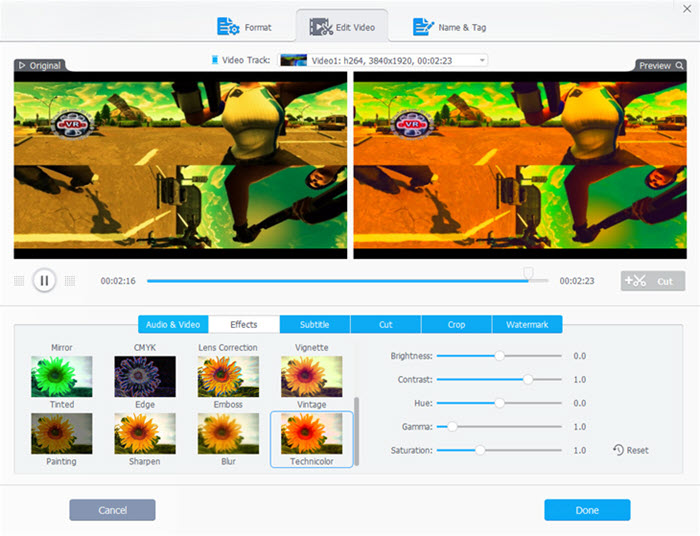
VideoProc Converter AI, the one-stop video processing software, is designed for both beginners and pros. With its various editing tools, powerful conversion engine and smooth recorder baked in, you can easily convert 180 360 degree VR videos, 3D to 2D, as well as normal 4K UHD videos, MKV, MP4, MOV and 420+ formats. It's easy to polish your video with features such as trimming, cutting, cropping, deshaking, denoising, merging etc.
If you want to watch 360 VR video in normal 2D mode, you can easily convert VR videos to 2D with VideoProc Converter AI.
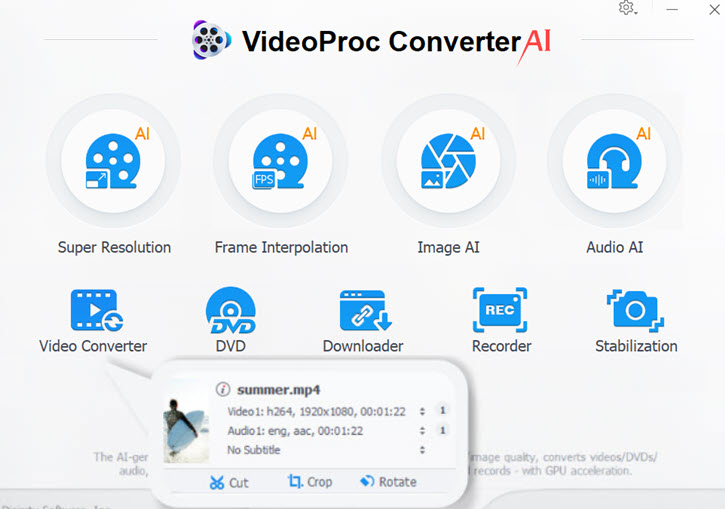
Supported OS: Windows 7, 8, 8.1, 10, 11; macOS 10.13 and higher.
Key Features
• Powered with GPU acceleration for high efficiency conversion
• Convert resolution, frame rate, aspect ratio, add effects, grade color for VR videos
• Batch convert videos to speed up your work flow

📢 Bonus Tips: If your VR videos are of low quality, enhance it with VideoProc Converter AI
Besides formats conversion, VideoProc Converter AI also has AI-powered Super Resolution tool to upscale video resolution and enhance video quality. It uses generative algorithms to remaster videos at max quality, restore vivid details that are natural and life like.
Below is the comparison of enhanced video vs source footage.
2. Wondershare Uniconverter
This tool help you to convert VR videos, with option for 180, 360 degree, and users can select the target devices for VR playback. Curently, it supports Samsung Gear, HTC Vive, Oculus Rift headsets.
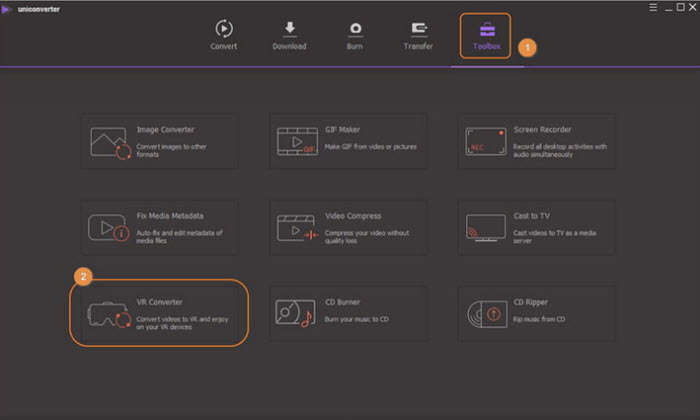
Supported OS: Windows 11/10/8/7/Vista; macOS 10.11 or later
Key Features
• Instant cutting of large video files
• Audio quality Optimization with audio-denoise feature
• Popular formats support like MTS, MOV and MP4
3. VisionDepth3D
If you want a free solution and don't mind a bit of hands-on control, VisionDepth3D is one of the most capable free tools available. It converts standard 2D videos into 3D SBS, interlaced, anaglyph, and other stereoscopic formats using AI-generated depth maps. It's very effective for creating 3D-style videos ready for headset playback or SBS-capable players.
Supported OS: Supported OS: Windows 10/11
Key Features
• AI depth estimation for 2D to 3D conversion
• upports SBS, interlaced, and anaglyph output formats
• Batch processing and GPU model support
• Useful for DIY VR/3D workflows without paid software
4. iFun Video Converter
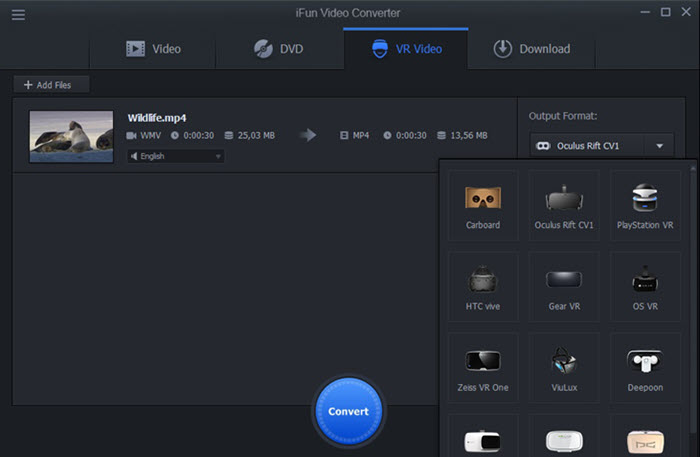
This powerful video converter support 150+ video and audio formats with extended support to convert normal 2D videos to VR-3D. You can watch converted clips with your VR devices or on 360 VR supported players on your desktop.
Supported OS: Windows XP and higher
Key Features
• Batch conversion of video files
• User-friendly presupposition
5. VideoSolo Video Converter Ultimate
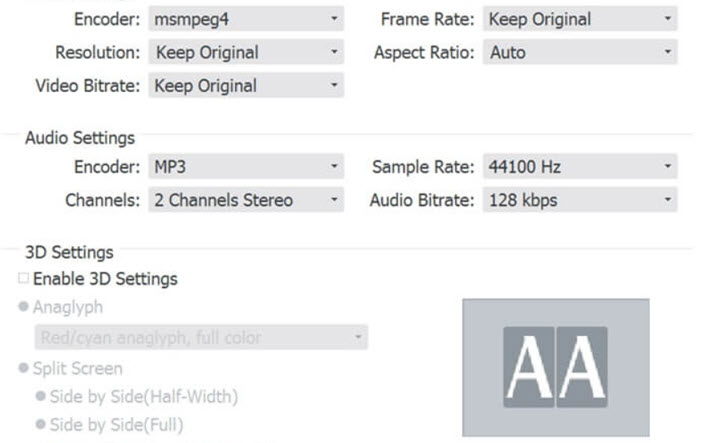
As a converter and basic video editor, this tool helps you to nail the job of 2D video conversion as well as 3D. You can easily choose a target device and format to convert videos. Once loading a source video, you can split screen with SBS or TB mode, thus simulating 3D effect for VR devices.
Supported OS: Windows XP and higher; Mac OS X 10.12 or above
Key Features
• Six times faster than normal converters due to its hardware accelerator technology
• Five 3D modes, such as Anaglyph 3D or Side by Side (Full) 3D
• Optimization of output video files to meet the demands of the headset you're using
6. Owl3D VR Video Converter
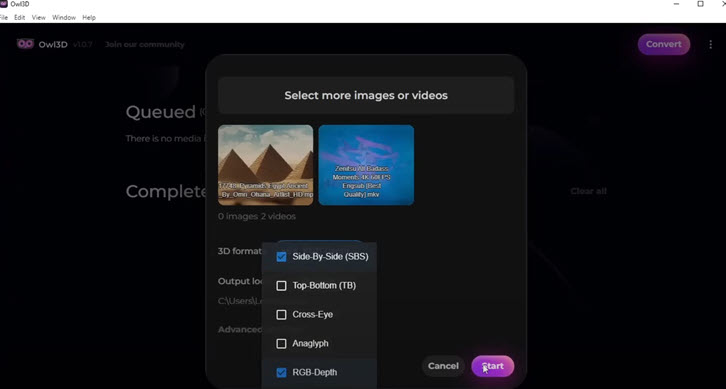
Owl3D VR Video Converter uses AI to transform regular 2D videos or images into VR videos. The software analyzes the scene to understand depth structure and produces left and right eye views. Once conversion is complete you can play the result on any VR media player that supports Side by Side or Top and Bottom formats such as Skybox VR Player, Virtual Desktop, Bigscreen, or other VR video players.
You simply choose your content, which can include movies, phone videos, animations, and more, set your output preferences, and start the conversion. Owl3D also offers batch processing and advanced settings for fine tuning the final result.
Supported OS: Windows
Key Features
• Supports multiple output formats like Side by Side for VR viewing
• Batch conversion for multiple files
• Easy start and view workflow to check converted videos
Part 2. Best VR Video Headsets to Enjoy VR Videos
Once your videos are in a VR-friendly format, the headset you use will shape the actual viewing experience. Resolution, optics, comfort, and content libraries all matter. Below are some of the most relevant headsets for watching VR and 3D video right now.
• Meta Quest 3 - 2064x2208
• Apple Vision Pro - 3660 x 3200
• Valve Index VR - 1440x1600
• Sony PlayStation VR2 - 2000 x 2040
• ByteDance Pico 4 Ultra - 2160x2160
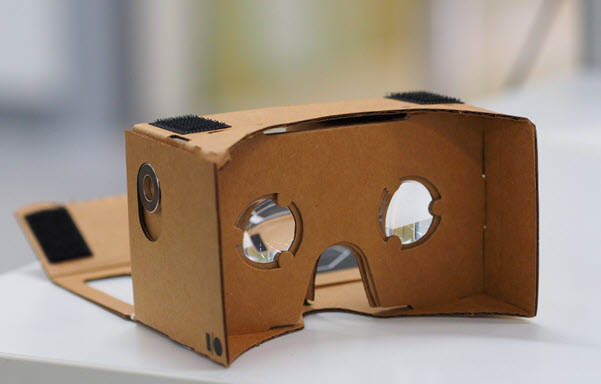
Tip: The low-cost way to enjoy VR content is using the Google Cardboard (discontinued but still available on Ebay or similar market place, or using plastic alternatives). You can fold the cardboard, attach your mobile infront of the lens, and enjoy side-by-side VR videos for an immersive experience.
Part 3. How VR Video Conversion Works
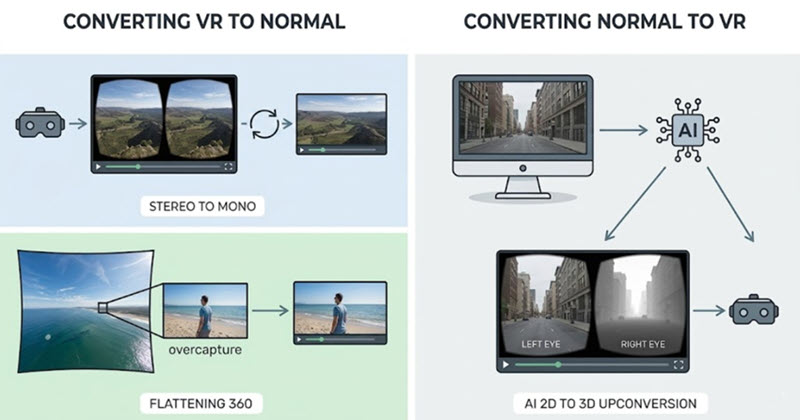
When referring to VR video conversions, it can either mean turning a VR video to a normal flat format, or up-converting from 2D to 3D VR in side-by-side format, or top and bottom format.
1. Converting VR Video to Normal Video
1) 360° video:
For 360 degree videos, some tools supports flattening it by locking a certain perspective, so that the exported file retains the rectangular view port as a standard video.
2) 3D VR video:
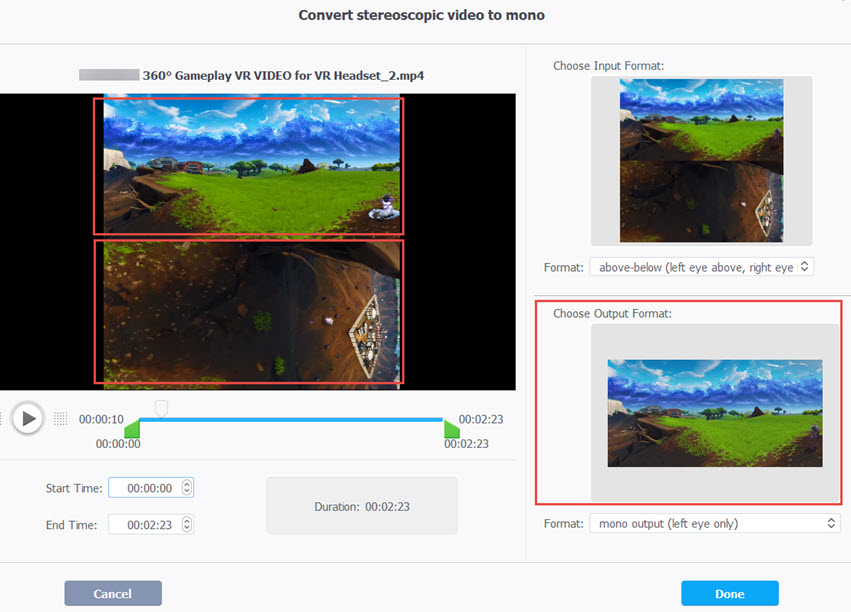
If you have a stereoscopic 3D video, the converter will extract the perspective. The output video will be a normal flat 2D video. Below is a quick illustration for side-by-side video and top-and-bottom video.
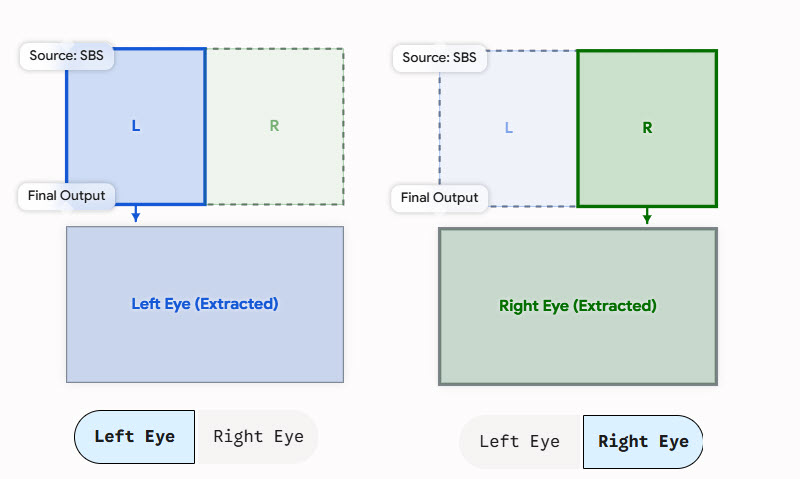
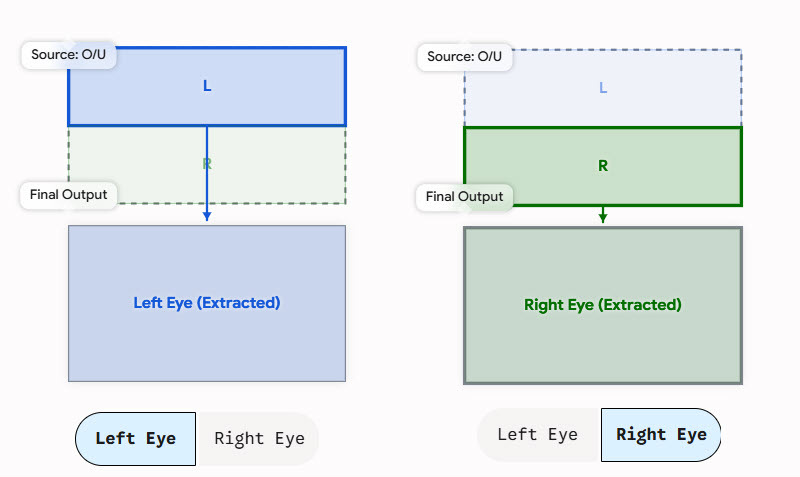
Using VR video converter such as VideoProc, the above process can be accomplished with its toolbox. Below is my testing of converting a stereoscopic video.
Click the buttons above to free download VideoProc Converter AI.
2. Converting Normal Video to VR Video
This usually requires AI algorithms to guess and create a left-eye and right-eye view. The capable AI tool will convert normal video to 3D SBS or top-and-bottom format. The results simulates an illusion of 3D depth when viewed in a headset, thought it won't look as flawless as content actually filmed on-set with professional VR equipment.
Part 4. VR Video Converter FAQs
1. How many types of VR technology are there?
There are three types of VR technology. Besides virtual reality itself, the other two are augmented reality and mixed reality.
2. Can any video be watched in VR?
Yes, any standard 2D video file, such as mp4 and mov, can be watched in VR using a player app like Skybox VR. It will appear on a giant virtual screen, like a private movie theater. To get an immersive 360-degree or 3D effect, the video must either be shot with special cameras or be converted using 2D-to-3D software.
3. How do I convert an MP4 to a VR video?
For most people, you don't need to convert the MP4 file. The easiest way is to transfer the MP4 to your VR headset and open it with a VR player app like Skybox. The app creates the VR experience for you. If you want to add 3D depth, you would use a tool like Depthify.ai to convert the MP4 into a 3D Side-by-Side MP4.
4. How do you make a VR video on YouTube?
Though YouTube has a simple video editor integrated into the creator studio, there is no 1-click magic for the standard video to VR conversion.
Still, you can enjoy VR videos uploaded on YouTube with a simple search of 360 video channel or virtual reality channel. Good news for iPhone users, you can click the cardboard icon and connect your iPhone with VR headset for the immersive viewing experience.
5. What is the best video format for VR?
The best and most compatible format is MP4 with an H.264 or H.265 HEVC codec. This format offers a great balance of quality, file size, and is universally supported by all modern VR headsets, including the Meta Quest, and player apps.
6. In which industries can VR technology be applied?
VR can be applied in multiple fields and industries. For educational purposes, it can be used in various training courses such as medical science and military training; and as for entertainment, it can provide an excellent visual experience for video games.
Final Words
The best 5 VR video converters provided above are the most highly-recommended at present and there must be one or two that suit your needs. Download the best VR video converter - VideoProc Converter AI on your Windows or Mac and give it a whirl now!