

Ever tried to download a video from a website, only to find there's no download button anywhere (such as in Blob)? I've been there too. Some videos can be saved with a simple URL, while others are hidden behind streaming players, temporary links, browser restrictions, or tools that fail halfway through.
That's because websites serve videos in different ways. Some use direct MP4 or WebM files that are easy to detect, while others rely on HLS or DASH streams, temporary URLs, login restrictions, or DRM protection that regular video downloading tool cannot handle.
After testing dozens of ways to download video from any website, including desktop software, online video downloaders, browser extensions, and advanced tools, I put together this guide to show which methods still work in 2026, what video quality they can detect, where they may fail, and which option is best for different situations. So, after reading this post, you'll know how to download videos from almost any website you need.
Disclaimer: The methods listed here for downloading videos from any website are intended for informational purposes only. We don't host, upload, or stream any copyrighted content, and we don't encourage or support illegal downloads. Please make sure to always use legal and official sources whenever possible.
My Top Pick: The Best Way to Download Videos from Websites
VideoProc Converter AI is probably the most reliable video downloader I've come across for downloading videos from websites. I use it for everything, including YouTube, TikTok, Reddit, Vimeo, Instagram, Facebook, Videoclip, and Wistia, and it has rarely failed me. They seem to update it constantly, so it can quickly catch up and add support when sites change their code. It grabs videos in the original quality (even 4K, 8K) and lets you save them as an MP4 or MKV without any fuss.
If you need to change formats or compress a file for editing and sharing, the built-in converter is super handy. You can quickly swap to MP4 or MKV and cut down the file size without visible quality loss. What's really cool is the AI Super Resolution. It can upscale old or grainy downloads to 4K while cleaning up noise and blur automatically, so you get a clear video that's ready to use without having to mess around with extra editing.
Some of It's Key Features:
- 1-Click to download all or selected videos from multiple URLs/playlist/channels.
- Support YouTube, Vimeo, Rumble, Twitch, and 1000+ UGC sites (2000+ niche sites).
- Flexibly pick resolution (icl. 4K), format, or language to get exactly the version you want.
- Bypass regional restrictions and access videos from anywhere with proxy support.
- Record your screen in 4K quality to save DRM-protected streams for offline viewing.
- Upscale low-resolution and low quality videos to crisp 4K with AI Super Resolution.
- All-in-one: Convert, compress, edit, and AI-enhance videos, images, and audio files.

How to Download Any Video from Any Website in 3 Easy Steps
Step 1. Download and install VideoProc Converter AI. Hit Downloader to open this video downloader.

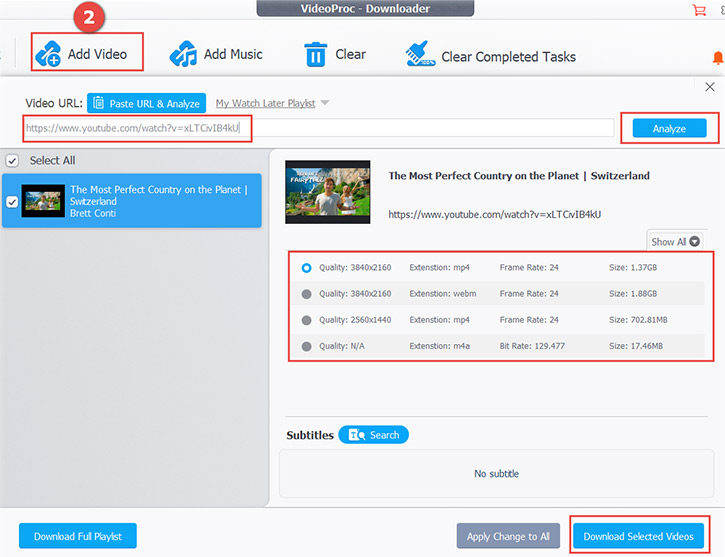
Step 2. Hit Add Video, paste the URL(s) of the video(s) into the program and click on Analyze. Choose the needed downloading option(s) and then hit Download Selected Videos.
?? Tips:
1) URL analysis failed? Your IP is likely blocked. No worry! You can easily set the prox to get things fixed.
- ?? To do so:
- Click the gear icon in the upper right corner.
- Choose Settings, then Downloader.
- Turn on Enable Proxy, then enter the proxy server address and port.
2) To ensure smooth performance, I recommend keeping the software updated so it can adapt to the frequent changes in download allowances or restrictions on Vimeo, YouTube, Facebook, and other sites. For support or troubleshooting, simply send feedback or visit the support page.
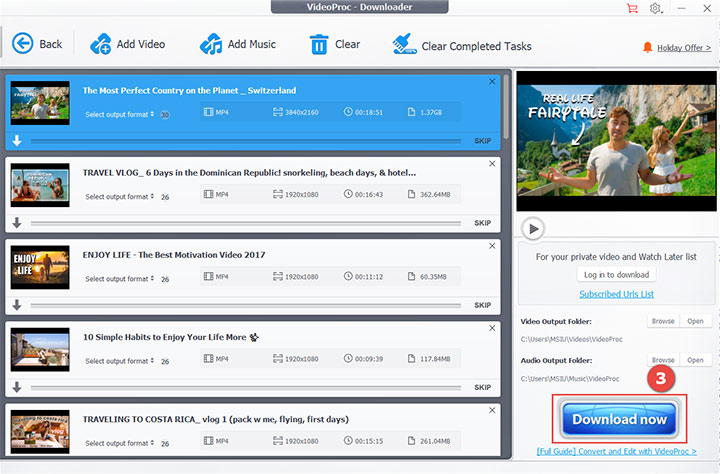
Step 3. Hit Download Now to start downloading these videos from websites.
For website hosting Vimeo videos, you can follow the detailed instructions here to download any videos.
7 Ways to Download Videos from Websites (No Installation)
1. Use VidPaw
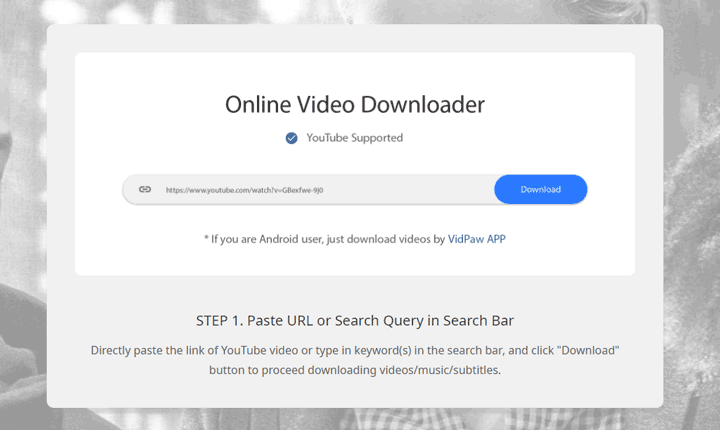
Vidpad lets you download videos from links of 1000+ sites, see it's supported websites.
This is a simple online tool that lets you download videos from online websites, including YouTube, Facebook, and X. It's easy to use and doesn't require any setup, making it a convenient option for downloading HD or even 4K videos directly from a URL. However, it's quite limited in terms of output options, as it only supports downloading videos in MP4 format. Due to the absence of bulk online video downloading, it can't help you download multiple videos from a single link. Also, from my recent testing, it's not as stable as expected. I ran into a few failed downloads, which can be frustrating if you're trying to save multiple videos at once.
Pros
- Works with many major video websites
- Simple and beginner-friendly, no setup required
- Supports HD and 4K downloads
Cons
- Only supports MP4 format
- Not very stable in recent testing
- Occasional download failures
2. Use Keepvid
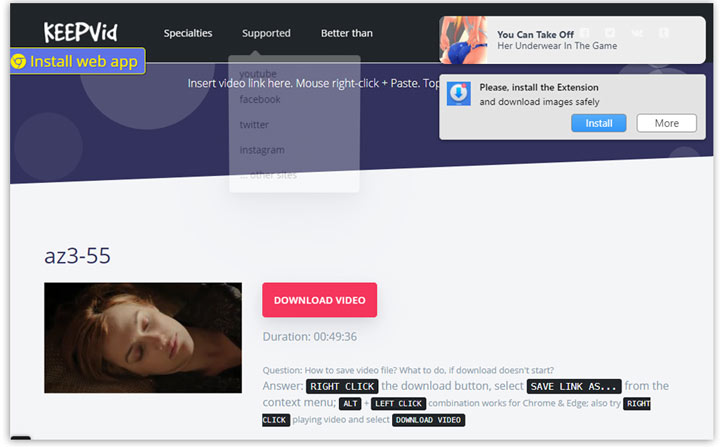
Keepvid is a handy online video downloader that lets you download videos from websites without installing any third-party software or extensions. While it claims to support over 100 sites (though there's no clear list available), my testing showed that it struggles with site-protected content. That said, it worked well for downloading videos from platforms like Vimeo, TikTok, YouTube, and most other video hosting sites.
A downside of Keepvid is the frequent pop-up ads and misleading download buttons, which can easily lead to unwanted apps being installed. Another limitation is how it handles downloads: it doesn't support multiple videos from the online URL of a playlist or channel, and it can't process multiple URLs in a single go. Each video must be downloaded individually.
Pros
- Download videos websites like Vimeo, TikTok, and YouTube
- No need to install software or extensions
- Simple and quick for single video downloads
Cons
- Frequent pop-up ads and misleading download buttons
- Struggles with site-protected content (e.g., login-required or private videos)
- No support for downloading playlists or channels
- No batch download videos from multiple URLs
3. Use Kapwing

Kapwing isn't positioned as a dedicated online video downloader, but it does offer this feature. In the past, it was easy to find, but today, it's much harder to locate—I only discovered it by searching for 'YouTube to WebM' on the platform. It seems Kapwing didn't plan to highlight this downloader feature, as it doesn't even state which platforms it supports. From my testing, it can download videos from sites like Vimeo, Dailymotion, YouTube, and more without any issues. It also allows you to download specific parts of a video rather than the entire file.
The most appealing aspect, and the real selling point of Kapwing, is its full range of advanced video editing features. However, I'd only recommend this for users who are already subscribed to Kapwing for editing purposes, as the free account comes with a large watermark. The video downloading feature isn't particularly powerful. It doesn't support bulk downloads, multiple formats, or the ability to bypass region restrictions with proxies. There's really no need to pay just for the basic download feature.
Pros
- Downloads videos from online using links of YouTube, Vimeo, and more websites
- Offers editing tools, allowing users to download only part of a video
Cons
- Feature is now only available for paid accounts
- Hard to locate on the platform; not clearly listed
- Doesn't specify which websites are supported
- Not support bulk downloading videos from multiple URLs
4. Use SaveTheVideo
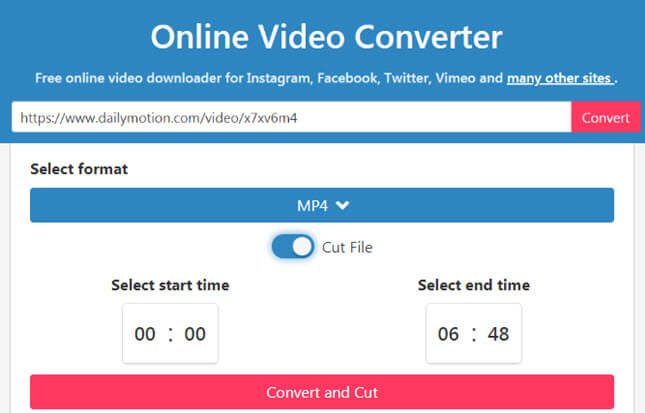
SaveTheVideo lets you download videos from 100+ websites, see it's supported websites.
SaveTheVideo is a beginner-friendly online tool for downloading video from URL online. It supports platforms like TikTok, Facebook, Odnoklassniki, Instagram, and Vimeo. "It allows you to choose from multiple output formats and resolutions, including up to 4K. You have the option to download either video-only or audio-only files, and even select the language and subtitles when available. It also features a built-in trim tool, allowing you to download just a specific section of a video instead of the entire file.
That said, I did notice a couple of drawbacks. It doesn't support YouTube, and the ads can be quite intrusive. Like most online video downloaders, it also doesn't support downloading multiple videos from a playlist or channel, or handling multiple URLs at once.
Pros
- Allows downloading video-only or audio-only files
- Supports subtitles and language selection
- Includes a cut feature for downloading specific parts of a video
Cons
- No support for YouTube
- Intrusive advertisements
- No batch downloads from playlists or channels
- Can't download videos from multiple URLs at once
5. Use FLVTO
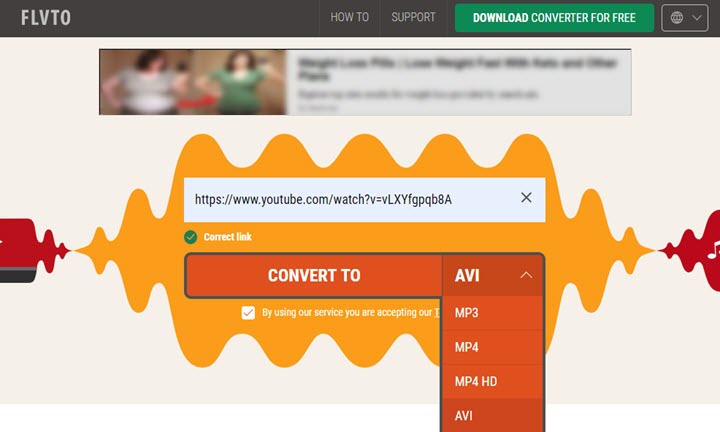
FLVTO might sound limited based on its name, but it actually allows you to download videos using links from YouTube and save the downloads as MP3 or MP4 files. That's pretty much all it does. There are no extra features, and it doesn't support any other websites. It doesn't support bulk downloads from playlists or channels, and there are no options to choose video quality, resolution, or similar settings. However, it can still be a decent option if you're looking for something simple, as it doesn't impose restrictions on video length or file size. Besides, in my experience, it's not very stable and often gets blocked or doesn't load properly in my region (US).
Pros
- Supports downloading YouTube videos as MP3 or MP4
- No limits on video length or file size
- Simple and straightforward to use
Cons
- Only supports YouTube
- No additional features
- No batch downloads for playlists or channels
- No options for quality or resolution selection
6. Use VIDO
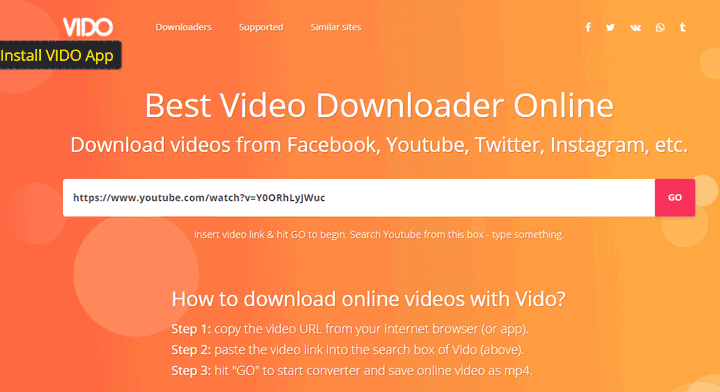
VIDO lets you download video from 800+ websites, see it's supported websites.
VIDO is a solid pick for downloading videos from any website, thanks to its supports for over 800 websites, including Twitter, Instagram, YouTube, and Tumblr. It's easy to use and offers flexibility when it comes to output formats and resolutions. Thus, if you're looking for a way to download online videos in up to 4K without installing any third-party software, it's definitely worth trying. However, it still comes with some of the common limitations shared by many online video downloaders. It doesn't support downloading multiple videos from a playlist URL or a channel URL at once. When you paste a playlist URL, it simply extracts the individual video links, requiring you to process and download each file separately.
I also noticed a clear difference over time. When I first used it back in 2021, it was ad-free and very responsive. Now in 2026, it includes more redirects, and the loading speed feels noticeably slower compared to most of the other tools I tested.
Pros
- Easy to use
- Offers multiple formats and resolutions, up to 4K
- No need to install software
Cons
- No support for downloading playlists or channels in bulk
- Requires processing videos one by one
- More ads and redirects compared to before
- Slower loading speed in recent testing
7. Use QDownloader
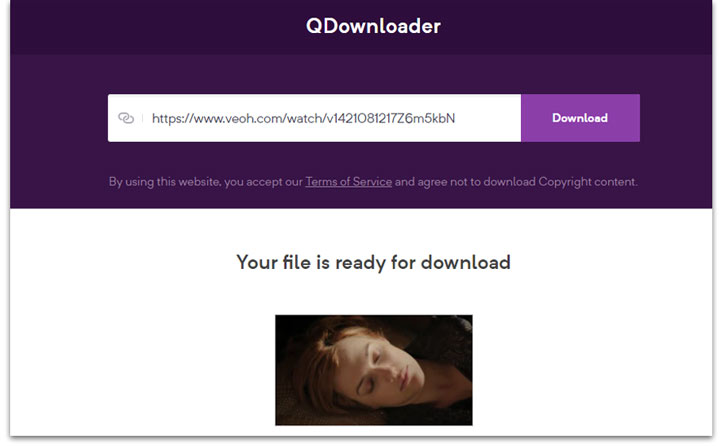
QDownloader doesn't provide a clear list of supported websites. However, based on my testing, it's a good pick for downloading any video from any website. It works with Vimeo, YouTube, Instagram, Facebook, and most other major video sharing and hosting platforms. It allows you to download videos in multiple resolutions, including 360p, 720p, and 1080p, along with a few additional options. You can also choose from the formats available for each specific URL, depending on the source.
This gives you some flexibility to get a better viewing experience when watching videos offline. The downside? It doesn't support bulk downloads, and the number of redirects can be quite heavy during use.
Pros
- Offers multiple resolution options (360p, 720p, 1080p, etc.)
- Lets you choose from available formats per video
Cons
- No support for bulk downloads
- No clear list of supported websites
- Not clear for embedded video downloads
- Heavy redirects during use
4 Ways to Download Video from Website with Browser Extensions
1. Use CocoCut
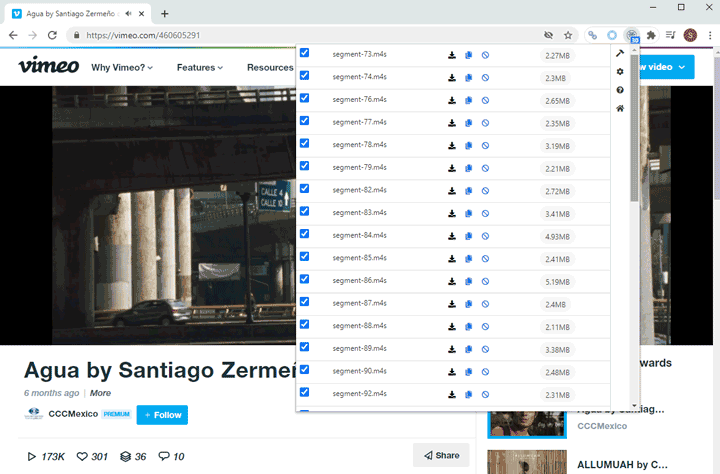
CocoCut is a free and fast browser extension for Chrome and Edge. It allows you to download videos directly from websites while browsing, without needing to install any additional software. You can choose from different download options. But unfortunately, there's no clear label or indicator, so it's hard to tell which option corresponds to which quality. The extension also supports HLS and M3U8 streams, meaning you can download live streaming content as it plays.
For videos that can't be directly downloaded for offline viewing, CocoCut offers a screen recording option as a workaround. Keep in mind that it's a freemium tool. If you want to download multiple videos from URLs, you'll need to upgrade to a premium plan. The free version is also limited to downloading videos in up to 1080p.
Pros
- Supports multiple formats (MP4, FLV, AVI, MOV, etc.)
- Can download HLS and M3U8 live streams
- Includes screen recording as a fallback
Cons
- Freemium model with feature limitations
- Batch downloading requires a premium upgrade
- Free version limited to 1080p
2. Use Video Downloader Plus
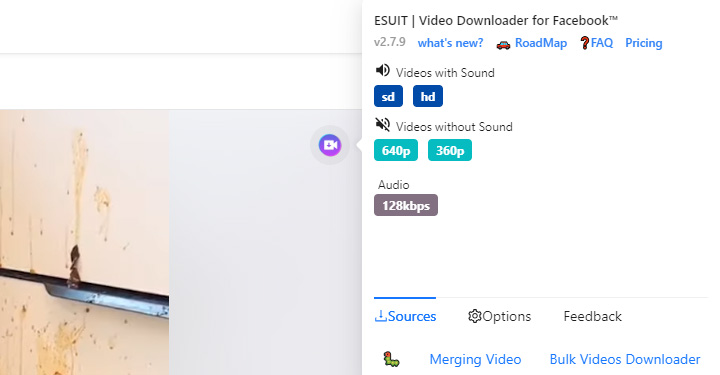
Video Downloader Plus by FBDOWN is a Chrome extension designed for quickly downloading videos from any website. It can detect and save videos in formats like MP4, WMV, and 3GP from platforms such as YouTube, Vimeo, Dailymotion, Facebook, Twitch, and many other streaming websites. On paper, it sounds quite powerful. It claims to support downloading multiple videos at once, detect various media types, and even record video streams online. It's also free to use and doesn't include ads or obvious limitations, which is a nice plus compared to many other tools.
However, my experience with it was mixed. Sometimes it works well, but other times it doesn't respond at all. The hardest part is simply getting it to load properly. This inconsistency makes it less reliable, especially if you need something stable for regular use.
Pros
- Can detect and download multiple media types
- Supports downloading multiple videos at once
- Includes video stream recording
- Free to use with no ads
Cons
- Inconsistent performance (sometimes works, sometimes doesn't)
- Can be difficult to load or initialize
3. Use Video Downloader Professional
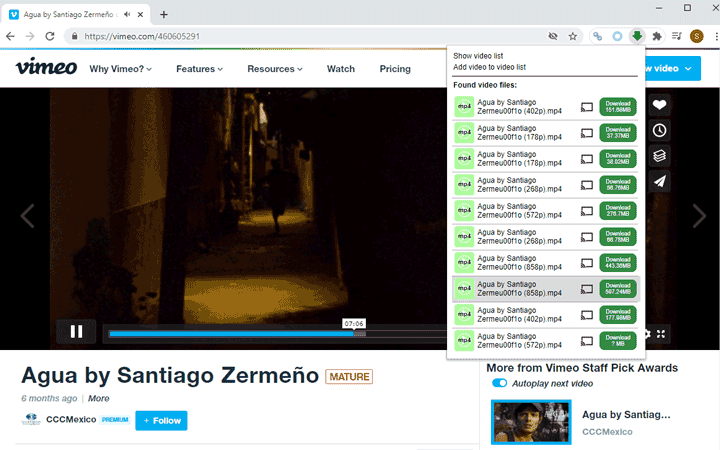
Video Downloader Professional is a popular Chrome extension that quickly detects videos playing on any webpage. You can download them in different resolutions and save directly to your local disk. It also lets you play MP4 videos on Google Chromecast or Google Home, and add videos to a personal list for quick access later.
But I have to point out that downloads from many major video sharing sites, such as YouTube, Instagram, Dailymotion, VK, and TikTok, are blocked due to Chrome Store restrictions, which is a common limitation for browser extensions. Some site-protected videos also cannot be downloaded. Despite these restrictions, the extension remains well-reviewed for its simplicity and straightforward functionality.
Pros
- Can detect and download videos from most websites when used outside of Chrome
- Support bulk download videos from websites
- Can play downloaded videos directly on Google Chromecast or Google Home
- Organizes videos in a personal list for easy access
Cons
- Some site-protected videos cannot be downloaded
- Gradually less reliable as more sites are unsupported over time
4. Use Video DownloadHelper
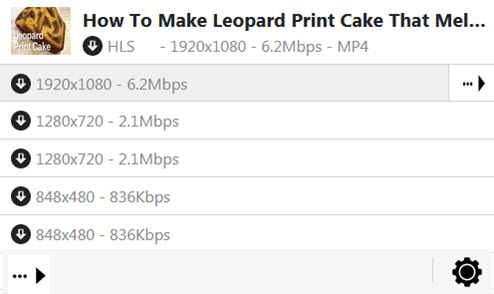
Video DownloadHelper is a popular Chrome and Firefox extension that can download videos from a wide range of websites, including live streams in formats like HLS and DASH. It supports high-quality downloads, file conversion to MP4 or WebM, and even audio extraction for podcasts or music. Multiple downloads can run simultaneously, and the extension can filter out ads or unrelated videos from the detection list. From my testing and user feedback, it's generally reliable, although some sites may occasionally be unsupported when streaming methods change. It's also a freemium tool, but I feel the free version is enough for most users.
Pros
- Works with a wide range of websites and streaming formats (HLS, DASH, etc.)
- Supports HD downloads and format conversion (MP4, WebM, etc.)
- Can extract audio from videos
- Allows multiple downloads at once
- Includes useful filtering to reduce clutter in detected videos
Cons
- May stop working temporarily when websites update their streaming methods
- Some limitations or mixed feedback around the paid version
- Interface can take a bit of time to get used to
10 Ways to Download Videos from Website with Desktop Software
1. Use aTubeCatcher
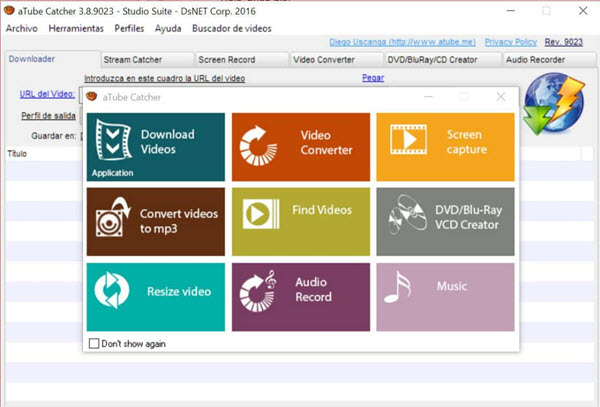
aTube Catcher is actually a pretty solid option for downloading video from URL online. It supports a wide range of websites like Vimeo, Facebook, Dailymotion, Spike, Yahoo!, Globo, and thousands of others. It can detect all available source formats and lets you save both video and audio from websites. You can also convert downloads into formats like MOV, WEBM, 3GP, MP3, and many other common (and even less common) formats. And for sources that can't be downloaded directly, there's a built-in screen recorder that lets you capture whatever's on your screen, whether that's streaming content, video calls, or even presentations.
You can also limit the download speed so your internet connection stays usable for other tasks. The annoyed thing is that the installation process is a bit questionable. It keeps asking you to accept additional software, and if you just click “Accept” , it will install those extras on your system. I looked it up, and a lot of people seem to have had the same experience. Many people claimed that you have to carefully decline multiple offers, otherwise it installs a bunch of unwanted stuff. I guess that explains why, despite its strong features, it's not that popular and doesn't have a great reputation.
Pros:
- Support downloading videos from a huge number of sites
- Multiple format options for download and conversion
- Many useful features: screen recorder, DVD burner, and more.
- Free to use
Cons:
- Bundled software during installation
- Requires careful setup to avoid unwanted programs
2. Use 4K Video Downloader
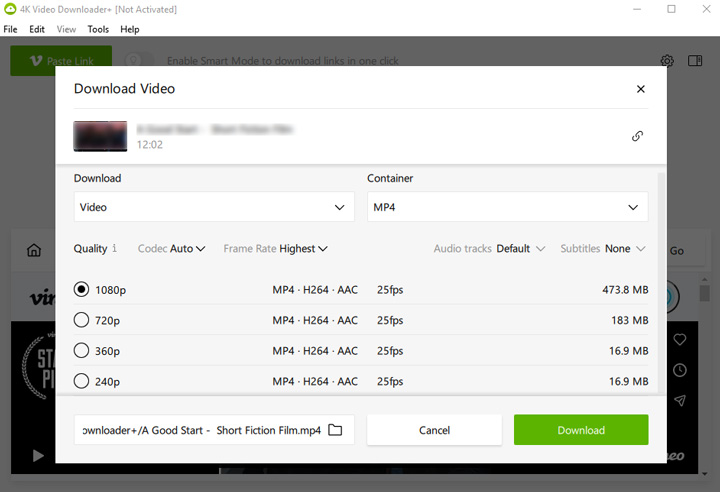
4K Video Downloader+ lets you download videos from popular websites, see the full list of it's supported websites.
This is a cross-platform tool designed to make downloading online videos straightforward. 4K Video Downloader Plus is not a tool that's strong in supporting a wide range of sites. It only focuses on several major platforms. But this may already be more than enough if your need is to download videos from URLs on YouTube, Rumble, Dailymotion, Facebook, Twitch, and other prevalent platforms.
You can save videos in formats like MP4, MKV, or FLV, depending on your needs. It provides a built-in browser, which is useful when you want to download videos from sites that require you to log in to watch in HD or 4K quality. For these sites, if you're not logged in, you'll only see lower resolutions like 720p, so many video grabbers can only detect and download the 720p version. Another useful feature is the option to automatically download new uploads from your subscribed YouTube channels, so you don't have to check for updates manually.
Pros:
- Supports major platforms like YouTube, Rumble, and Twitch
- Built-in browser makes it easier to access full-quality videos
- Supports common formats like MP4, MKV, and FLV
- Auto-download for subscribed YouTube channels
Cons:
- Doesn't support as many sites as some other downloaders
- Need to log in to get higher resolutions on certain sites
- Feature set is a bit limited compared to more “all-in-one” tools
3. Use JDownloader
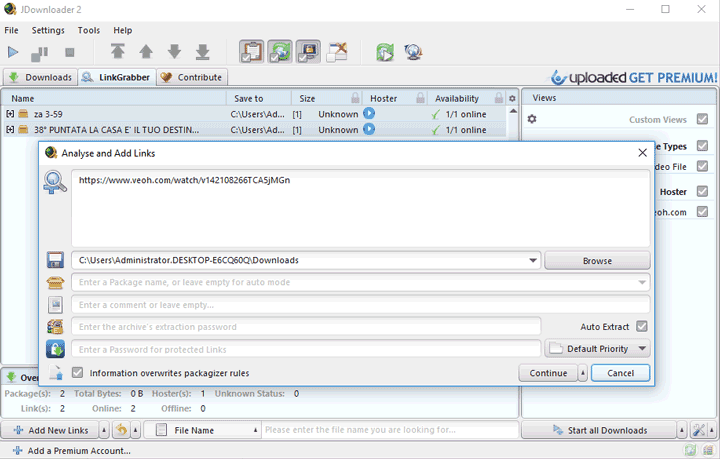
JDownloader, first released in 2011, is one of the more well-known free download management sofetare that's open-source program and available on Windows, Mac, and Linux. Once you add a URL link to it, it can automatically detect and grab all downloadable content on that page. This includes not just videos, but also audio files, images, and even entire file packages. It supports downloading videos from the URLs of 3000+ websites, including XHamster, Vimeo, Twitch, Udemy, TiKtok, Flicker, and Odysee.
Thus, it's an ideal choice for those looking for a video downloader that works across any website, or for anyone who needs a tool to save all content from a webpage, whether it's multiple videos or segmented content, for offline viewing or listening. However, this also comes with trade-offs. The interface feels outdated, the setup process can be a bit confusing, and it's not as straightforward as simpler video downloaders. In a word, it's powerful, but definitely takes some time to get used to.
Pros:
- Can automatically detect downloadable content from a page
- Supports batch downloads, which is useful for multiple files or playlists
- Handles redirects and more complex link structures well
- Available on Windows, Mac, and Linux
- Completely free and open-source
Cons:
- Interface feels outdated compared to modern tools
- Not very beginner-friendly, takes time to understand how it works
- Setup and configuration can feel a bit confusing at first
- Can be overwhelming for casual users who just want quick downloads
4. Use YT-DLP
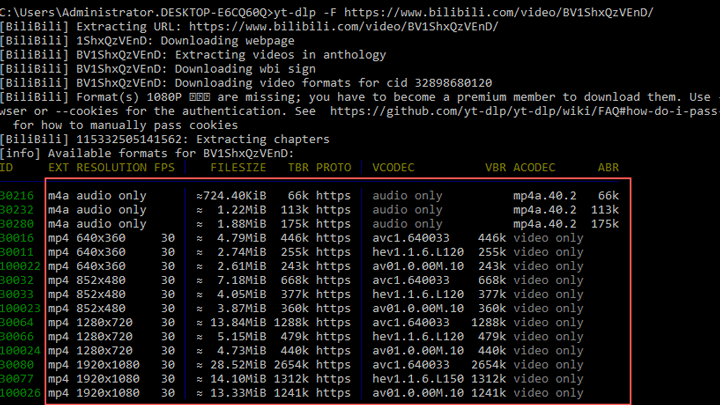
yt-dlp lets you download videos from 1800+ sites, see its supported sites).
yt-dlp is currently one of the most powerful and actively maintained open-source tools for downloading audio and video from URL online. It supports a massive number of websites, well over 1,800 platforms, and covers most of the major services you can think of, including mainstream video and streaming sites. In terms of quality, it can fetch the best available source from a video. If the original content is available in HD, 4K, or even higher resolutions, yt-dlp can usually detect and download it at full quality without downscaling. It also supports a wide range of formats and extraction options, which makes it very flexible depending on how you want to save the file.
Keep in mind, its not for beginners to download video from any website. You need to use terminal commands to operate it, which can feel intimidating at first if you are not used to that kind of workflow. In practice, everything is command-line based, and even the setup process can already be a challenge for beginners, including installing dependencies like FFmpeg, configuring the environment, and getting everything to run properly. You also need to learn the basic commands and in many cases troubleshoot errors on your own when something does not work as expected.
Pros:
- Extremely powerful and actively maintained open-source tool
- Can download videos from the URLs of 1800+ websites.
- Support saving videos at the best available quality, including HD and 4K.
- Very flexible in terms of formats, subtitles, playlists, and metadata extraction
- Highly reliable for long-term use due to frequent updates
Cons:
- No graphical user interface, everything is command-line based
- Initial setup can be difficult, especially installing dependencies like FFmpeg
- Requires learning terminal commands to use effectively
- Troubleshooting errors often has to be done manually
- Not beginner-friendly at all for casual users
5. Use Freemake Video Downloader
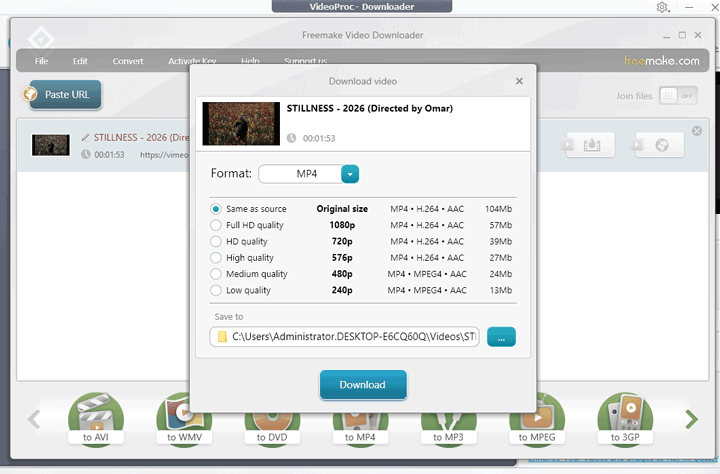
Freemake Video Downloader said its supports downloading videos using links from 10000 sites, which is a big figure, but honeslt, its not very easy to test out is this a market hype or the facts. aNYWZY, itdoesn supportVimeo, Twitch, Dailyotion, YouTUBE, AND MANY, but I did encounter errorfor downloadingv ideos from Tubi. It'sinterface is, though out of dated, still easy to natviage and keep everything well organzied. It pompst it can downlaod videos wth the original quality, even the source come with that qauqlit. However, from my test, it doesn;'t Below I share the screenshot I downlaod videos from URL of Viumeop. It only provides 1080p as the most larg ereoslution. However, the smae video link give to videoproc, it reqatures it provides 3000p x2000p as the largest resoolution. And the selection of output forats is also limited.
Pros:
- Simple and easy-to-navigate interface
- Basic downloading process is straightforward
- Work with major platforms like Vimeo, YouTube, and Twitch
Cons:
- Inconsistent performance across different platforms
- Limited maximum resolution in some cases (e.g., 1080p only in tests)
- Fewer output format options compared to more advanced tools
- Occasional download errors on certain websites
6. Use 5KPlayer
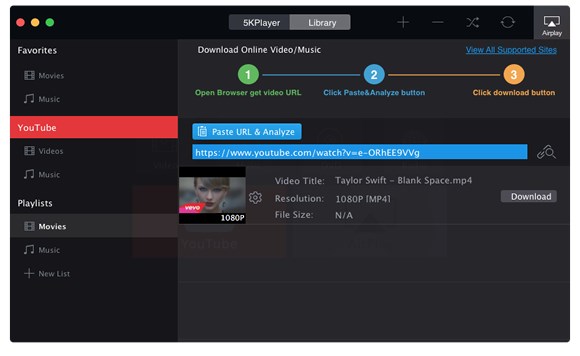
5Kplayer is mainly known as a media player on Windows and Mac, but it also includes a built-in video downloader feature that works as an all-in-one tool for downloading videos from URLs online. It supports downloading videos in resolutions ranging from 720p, 1080p, up to 4K and even 8K, depending on what the source platform provides. It works with a number of popular websites, including Facebook, Dailymotion, and others. The interface is fairly clean and straightforward, so basic downloading tasks are easy to complete without much learning curve.
Pros:
- Combines a media player and video downloader in one tool
- Supports major platforms like YouTube, Facebook, and Dailymotion
- Can download videos in multiple resolutions and quality variations
- Simple and easy-to-use interface for basic tasks
Cons:
- Download feature feels secondary compared to dedicated tools
- Limited advanced features compared to more professional downloaders
7. Use VLC media player
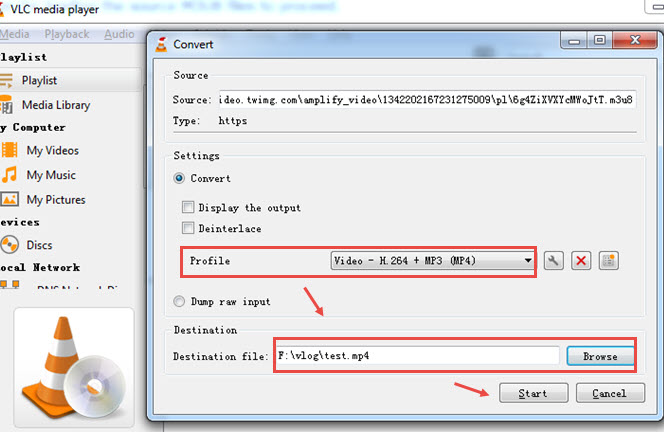
VLC media player is one of the most widely used media players across Windows, Mac, and Linux. While it is not a dedicated video downloader, it can sometimes be used as a workaround to open online video streams through network URLs. In some cases, if you paste a direct video stream link, VLC can load and play it. From there, users may use screen or stream recording as a way to save the content for offline viewing. From my test, this approach works for simple and publicly accessible video sites, but it often fails on modern video sharing platforms that use protected playback or more complex delivery methods. Even when it does work, the output quality is often lower than the original resolution. Compared to other solutions to download videos from online URLs, VLC is better seen as a fallback option.
Pros:
- Free and open-source, available on Windows, Mac, and Linux
- Extremely versatile media player that supports almost all video/audio formats
- Can sometimes open online video streams via network URLs
Cons:
- Not a real video downloader
- Require manual steps to save online videos
- Unreliable for modern streaming platforms with protected playback
- Poor output quality
8. Use YTB Video Downloader
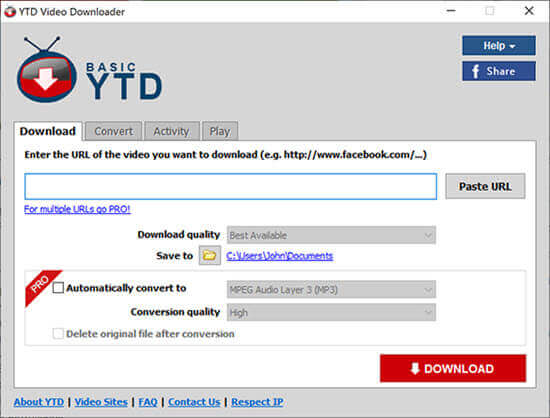
Don't be fooled by its name, YTB Video Downloader is a lightweight option for users who want a simple way to download videos from any website without dealing with complex settings. It supports URLs from 50+ video sharing platforms, including major ones like TikTok, Vimeo, Facebook, YouTube, and Dailymotion. It allows users to select video quality before downloading, and in general it can support high-resolution sources. However, in the free version, downloads are limited to single-task downloads, and the maximum available resolution is 1080p. Higher-quality options such as 4K are typically restricted to paid usage or advanced modes.
Pros:
- Simple and lightweight, easy for beginners to use
- Straightforward interface with minimal setup
- Good for quick, one-off downloads
Cons:
- Free version only supports single downloads (no batch downloading)
- Maximum resolution in free mode is limited to 1080p
- Advanced features and higher-quality options are restricted
- Not ideal for heavy or professional use cases
- Smaller website support compared to more advanced tools like yt-dlp or VideoProc
9. Use VDownloader
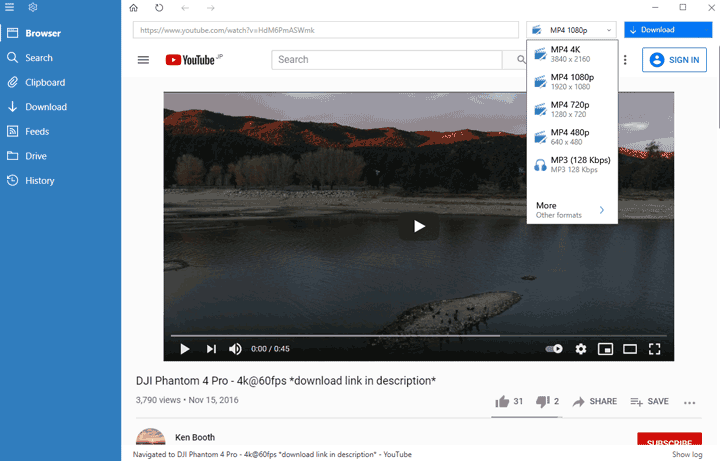
VDownloader claims to be able to download videos from any websites. On its official website, it advertises support for up to 10,000 sites, but elsewhere it also mentions compatibility with around 200+ platforms, which makes the actual coverage a bit confusing and unclear. From my testing, it does not reliably work with many well-known platforms such as Vimeo, Patreon, and BitChute, among others. It's interface is simple and easy to understand.You can choose the desired output format and resolution before downloading, and it also supports bulk downloading. In addition, it includes a built-in browser that lets users search and browse content such as shorts and videos using keywords.
Pros:
- Supports bulk downloading, useful for saving multiple videos at once
- Simple interface, easy for beginners to navigate
- Built-in browser for searching videos via keywords
Cons:
- Website support claims are inconsistent and confusing (200+ vs 10,000+ advertised)
- Limited transparency about actual supported sites list
10. Use ClipGrab
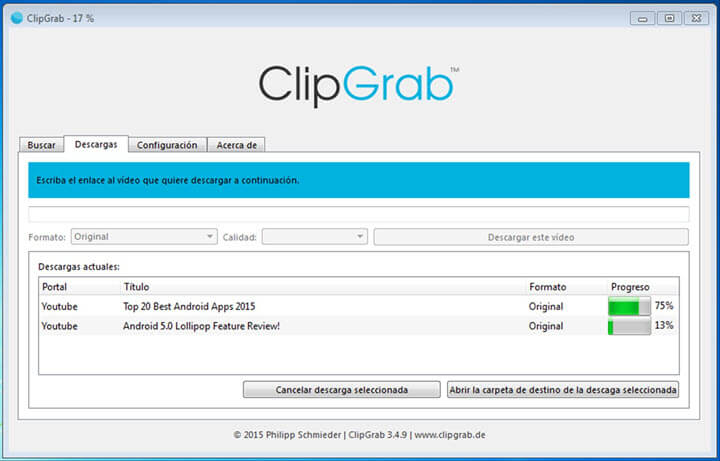
ClipGrab is another decent pick for users who want to download any video from any website without paying a dime. This opone source tool is available on Windows, Mac, and Linux. It provides a simple graphical interface for downloading videos from URls of websites like Twitch, TiKTok, and Vimeo. Its video extraction capability has historically been linked to tools like youtube-dl, and in many workflows it can function similarly to a graphical interface layered on top of command-line download engines such as yt-dlp. That said, it is not a pure yt-dlp frontend, and its integration is not as direct or consistent as modern dedicated GUIs built specifically around yt-dlp. Give it a caution, ClipGrab has raised some trust concerns mainly around its Windows installer rather than the core app. Reports mention third-party bundling (via dotInstaller/TheCassiniLabs), which can add extra offers and trigger security warnings like PUA detections in Microsoft Defender and high-risk flags in some VirusTotal scans.
Pros:
- Simple and easy-to-understand interface
- Includes built-in search for finding videos directly
- Also allow basic video conversion
Cons:
- Raises some trust and security concerns depending on installer source
- Limited transparency around updates and verification
- Fewer advanced features compared to modern downloaders
FAQs About Downloading Videos from Any Website
Is it legal to download videos from websites?
It really depends on the platform and how you plan to use the video. In most cases, downloading copyrighted content without permission, especially for redistribution or commercial use, is not allowed. That said, downloading videos from websites for personal offline viewing falls into a bit of a gray area. It's always a good idea to check the site's terms and respect the creator's rights.
Why do some online tools fail to analyze a video link?
This happens more often than you'd expect, and usually for a few common reasons. Some platforms (like Netflix or Disney+) use DRM protection, which blocks downloads entirely. If the video is private or restricted, the tool simply can't access it. On top of that, certain sites generate temporary links that expire quickly, or they may block the IPs used by online downloaders.
Can I download 4K videos from URLs using online tools?
In most cases, not really. Many online tools limit the resolution to 720p or 1080p to reduce server load. If you're looking to download 4K videos or higher frame rates like 60fps from website, desktop tools usually handle it much better.