Download Online Videos & AI Upscale to HD/4K!

Found a great song, podcast, interview, or background soundtrack on YouTube but only need the audio? Downloading an entire video just to listen to it later wastes storage space, and finding a reliable way to save the sound isn't always straightforward. Some YouTube-to-MP3 converters are filled with ads, others limit downloads or fail to process certain links. And even when a tool offers 320kbps MP3, that doesn't necessarily mean you're getting better audio quality. The good news? You don't always need to download the full video or sacrifice audio quality. Depending on your needs, you can extract the available audio stream directly, convert it to MP3, or save just a specific section of the sound.
In this guide, we'll walk you through 8 ways to extract audio from YouTube, including desktop software, online tools, and audio recording methods. You'll learn which options are easiest to use, what audio formats they support, and how to avoid unnecessary quality loss.
Quick Answer: How to Extract Audio from YouTube
The simplest approach is to use an audio downloader that can save the audio stream separately from the video. For example, VideoProc Converter AI provides a graphical interface for analyzing supported video links and selecting available audio formats. Here's how it works:
Step 1. Copy the YouTube video URL. Open the video containing the audio you want and copy its link.
Step 2. Analyze the video. Launch VideoProc Converter AI. Click Downloader > Add Music, paste the URL. Hit Analyze.
Step 3. Download the audio. Choose an available audio format and save it to your computer.
Tips: For the best audio quality, keep the original AAC or Opus stream whenever possible, as converting compressed audio to 320kbps MP3 won't restore lost details. You can also batch-extract audio from YouTube playlists or videos by different creators, saving time when working with multiple videos.
7 Best Ways to Extract Audio from YouTube
1. VideoProc Converter AI
Need to batch download music from one or multiple YouTube music playlists? Want to save the audio from a YouTube video without downloading the entire video or dealing with distracting online converter ads? VideoProc Converter AI offers a straightforward desktop workflow for extracting audio from YTB links. Available for Windows and Mac, it lets you analyze individual video/music URLs or playlists, choose from available download formats, and save audio for offline use. You can also trim audio clips or convert downloaded files into other formats when needed.
How to Extract Audio from YouTube with VideoProc Converter AI
Step 1. Copy the YouTube video or music link address. Download VideoProc Converter AI and go to the Downloader section from the home screen.
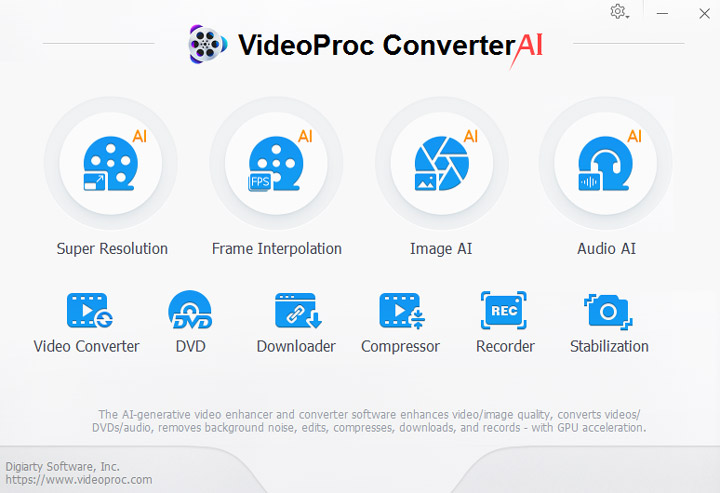
Step 2. Click Add Music on the top bar. Paste the YouTube URLs. Hit Analyze and wait for the downloader to do its job.

Step 3. VideoProc Converter AI now display the available download options. Select the audio format and quality option that best suits your needs. Choose where to save the file, then click Download.

Bonus Features:
- Download 4K, VR, 360-degree videos and high quality music at full bandwidth speed.
- Set proxy to grab videos and audio not available in your region.
- Cut/Trim the video and extract the corresponding sound track at original quality.
- Download videos and songs from 1000+ popular sites: Facebook, Dailymotion, Instagram…
- In-app converter, screen recorder and DVD ripper.
- Audio AI feature to enhance audio quality and reduce background noise.
2. aTubeCatcher
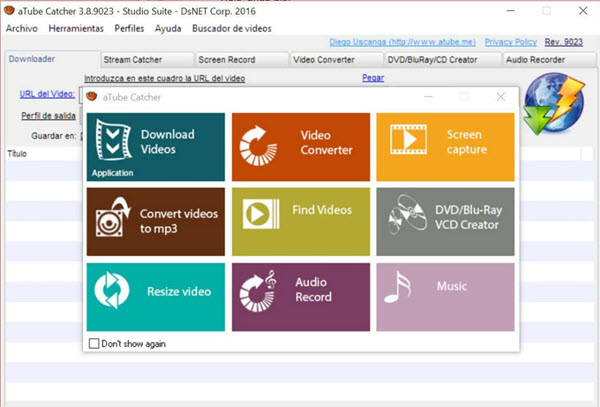
If you want to convert YouTube videos into MP3, WMA or OGG, aTubeCatcher is a nice choice. The desktop-based tool allows you to save YouTube videos directly as audio files. You can add multiple video resources, and this tool will download them one by one. Besides YouTube, other similar videos and music sharing sites are supported as well. Apart from its downloading engine, aTubeCatcher can also be used as a DVD/VCD burner.
3. ClipGrab
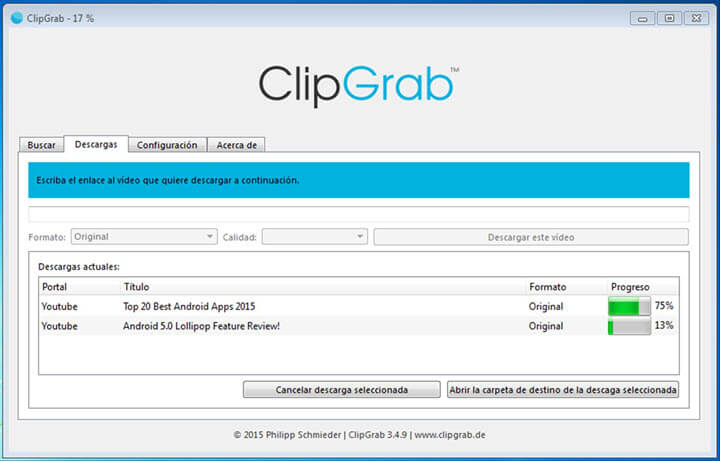
ClipGrab is a free donationware to download online videos. If you choose to rip the audio file from the YouTube video, ClipGrab will help you to add an ID3 tag to the music by referring to the video metadata. It is quite handy so that you can keep track of the artists and other information. If ClipGrab is running in the background, it will auto-detect the links you copied, and then you can choose whether to download the entire video or merely the audio stream.
4. Mediahuman YouTube to MP3 Converter
Like other desktop-based tools, you can easily copy and paste URL to extract background music from a fabulous video. Mediahuman also has nice integration with the web browser. When you are on the watch page of a YouTube video, you can 1-click open that link in Mediahuman to start audio ripping. It works for mainstream browsers such as Chrome, Firefox, Safari, and Opera. Mediahuman also has other nice apps for music lovers, such as Lyrics Finder and audio converter.

5. Converto
If you want to extract part of the audio from YouTube video, Converto is a quick tool to use. For instance, there is a nice piece of one-minute music in an hour-long YouTube video, then you don't need to rip the entire file. Converto allows you to set the start and end time of the audio, and extract it from the video. The only drawback is that you cannot select the bit rate or quality of the ripped audio, and you can only save the clip as MP3 or MP4.

6. MP3Skull
If you want to quickly extract songs with an online tool, MP3Skull is the go-to choice. It doesn't have any ads or annoying pop-ups. It supports videos with a maximum length of 2 hours and is free of charge. Though there isn't any preview of the file, such as a thumbnail for you to make sure you are downloading the right one. Another drawback is you cannot select audio quality. Based on our test, if the original video is encoded in WebM (with audio encoded in opus), this tool will save it as 192kbps MP3.

7. YouTube to MP3 Converter from Addoncrop
To extract audio from YouTube videos, you can also use browser extensions for this. YouTube to MP3 Converter from Addoncrop is a good one. It offers easy integration with YouTube and allows you to select the quality you want. After installing and giving necessary permissions, it will add a download button directly to the YouTube video page. Here's how to rip MP3 from YouTube with a browser plug-in.
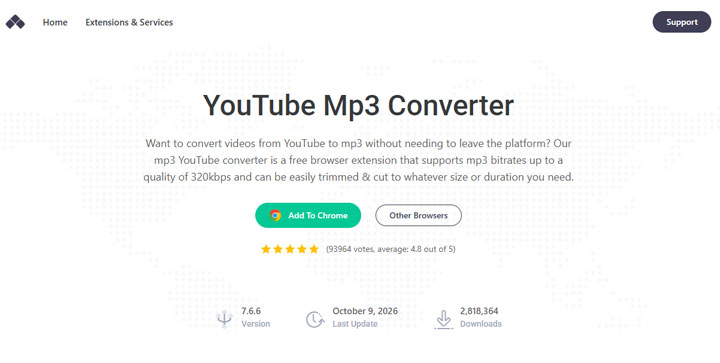
Step 1. Visit the Addoncrop website and find the YouTube to MP3 Converter extension, hit Add to Chrome. Follow the on-screen instructions to add the extension.Step 3. Open the YouTube video you want to extract audio from.
Step 2. Click the Download button added below the video, then select MP3 and your preferred audio quality. Click Download to save the audio file to your device.
8. AceThinker Music Recorder
AceThinker Music Recorder is undoubtedly one of the well-designed desktop-based tools that allow users to extract audio from YouTube and other popular music streaming sites. It also captures live-streaming audio like radio and podcasts, records audio conversations and voice messages, and captures voice recordings. Audio recordings can be played, renamed, and deleted by looking at the recording list. More of that, it has a unique feature that allows users to schedule an automated audio recording to capture any sound playing on their computers easily. This audio recorder also enables users to set a specific length for their records, adjust the volume according to users' preference, and support many input formats, including MP3, AAC, FLAC, WMA, etc.
How It Works:
Step 1. Go to https://www.acethinker.com/music-recorder and click Free Download. After the download, launch the audio recorder on your computer. Open it, you can choose to turn on or off your system sound and microphone.
Step 2. Turn on the System Sound. If you also need to record the voice from the microphone, turn on Microphone.
Step 3. Go to YouTube and click the video from which you want to extract audio. Click on REC to start recording.
Step 4. As soon as the audio recording has been done, click the red box on the left corner of the tool to stop the recording.
You can adjust the volume of the system sound and the sound from the microphone. You may also clip the audio by setting up a starting and ending time and clicking Save to save the file.

YouTube to Mp3 320kbps Converters: The Hype or Hope
You probably have noticed that there are tons of YouTube audio rippers highlighting their ability to save YouTube video as 320kbps. But does that mean higher sound quality? Or if a downloader doesn't support 320kpbs, it is inferior to the one that does?
Rules of thumb: there will always be some quality loss when you are transcoding files from one codec into the other. It might not be the dealbreaker, though. Sometimes you can hear the difference, and sometimes you can't.
According to the Subreddit 4kdownload apps blog, YouTube encodes audio stream in two types, AAC or Opus, with the AAC wrapped in the MP4 container and Opus in WebM. As for our test at the time of writing, every audio stream in a YouTube video is Opus 48000 Hz @ 160 kbps (based on 100 pieces of randomly picked videos). Since YouTube hasn't clearly stated about audio quality and what codecs they are using all the time, we have no idea if it holds true for zillions of videos encoded in YouTube after being uploaded. However, you can check the media information right within the watch page.
How do I find out the audio codec of a YouTube video?
Right-click on the video you are watching, and select the Stats for nerds. You shall see the codes for the video stream being av1 and audio opus.

According to the following figure, Opus tracks usually have better quality than AAC and MP3 tracks at the same bit rate, but may not to the point that you can hear the difference.

Large file size doesn't necessarily mean higher quality unless it is encoded with a lossless codec. Since MP3 is lossy, and the source audio stream is encoded in AAC or Opus, the conversion will still be lossy. Besides, some tools are merely upscaling the bit rate, and adding some white noise. Do you really need a 320kbps MP3 that sounds more or the less same as, say,160kbps Opus?
You can test an audio track's true bit rate with a spectrum tool such as Spek. Pay attention to the cut-off frequency, and below is the corresponding bit rate. Therefore, for an MP3 file to be 320 kbps, it will have a cut-off at 20 kHz.
- Cut-off at 11kHz: Bit rate 64 kbps.
- Cut-off at 16 kHz: Bit rate 128 kbps.
- Cut-off at 19 kHz: Bit rate 192 kbps.
- Cut-off at 20 kHz: Bit rate 320 kbps.
- Cut-off at 22 kHz: Bit rate 500 kbps.
For instance, we use VideoProc Converter AI to save a YouTube video to the local drive as WebM, and drag that file into Spek. As shown in the image below, the cutoff frequency peak at 20kHz, corresponding to a bit rate of 320kbps.

Extract Audio from YouTube Legally and Safely
To extract audio from YouTube videos, it's crucial to be aware of and respect copyright laws and YouTube's Terms of Service. Generally, downloading and distributing copyrighted content without permission is illegal. However, there are legal ways. Here are some important considerations.
- Copyright: Always ensure that you are legally allowed to extract and use the audio before proceeding.
- Safety: Research online tools and software to avoid malware or unwanted ads.
- YouTube Premium: Consider subscribing to YouTube Premium for offline viewing and other benefits if you want to download videos and music legally.
By using appropriate tools and respecting copyright, you can efficiently extract audio from YouTube videos for personal use or projects, ensuring compliance with YouTube's policies and legal requirements.
Free Download VideoProc Converter AI to Extract Music from YouTube Videos at High Quality: